


+44 7453 948028
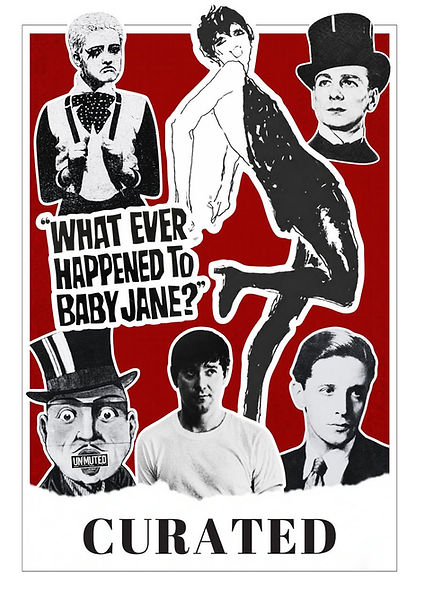
Curated Collection
An exhibition of original film and music memorabilia and personal correspondence from the 20th Century
Where? Lord Rubin’s Wine Bar, Market Place, Arbroath. DD11 1HR.
When? Thursday 24th September 2026 to September 2027
Why? To promote person-led care throughout the UK and dedicated to people living with (and who have lived with) a dementia. Money through donations will be raised in aid of Alzheimer Scotland Dementia Dog project.
Over 30 pieces of showbusiness memorabilia will be showcased in an exhibition aimed at raising awareness for people living with dementia, improving care standards for them and their Carers, and supporting the charity Alzheimer Scotland.
Featuring treasures from icons such as Laurence Olivier, Joan Crawford, Noel Coward, Ivor Novello, playwrights Harold Pinter, Joe Orton, Alan Bennett, and musicians ranging from Liza Minnelli, Leonard Bernstein, Bing Crosby and Andrew Lloyd-Webber, the exhibition runs until September 2027.
This unique private collection of 20th-century history has been curated by Gary Robinson, founder of Unmuted, an organisation dedicated to improving carers’ lives through advanced training and better pay.
To celebrate the exhibition, limited edition postcards have been created and will be available to patrons of Lord Rubin’s Wine Bar in exchange for a donation supporting Dementia Dog/Alzheimer Scotland.
While the exhibition aims to raise awareness of Person-Led Care, the year-long event is dedicated to individuals who have lived with, or are living with, a dementia, including football legend Frank Kopel and the curator’s father, Michael Rothwell, who had Vascular Dementia until his passing in 2023.


In 1960, Armstrong-Jones married Princess Margaret, sister of Queen Elizabeth II, and was created Earl of Snowdon the following year. He and Princess Margaret eventually divorced in 1978.
In the early 1960s, Snowdon became the artistic adviser of The Sunday Times Magazine, and by the 1970s had established himself as one of Britain's most respected photographers. Though his work included everything from fashion photography to documentary images of inner-city life and the mentally ill, he is best known for his portraits of world notables, many of them published in Vogue, Vanity Fair, The Sunday Times Magazine, and The Sunday Telegraph Magazine. His subjects included Marlene Dietrich, Laurence Olivier, Maggie Smith, Leslie Caron, Lynn Fontanne, David Bowie, Elizabeth Taylor, Rupert Everett, Anthony Blunt, David Hockney, Princess Grace of Monaco, Diana, Princess of Wales, Barbara Cartland, Raine Spencer (when she was Lady Lewisham), Desmond Guinness, British prime minister Harold Macmillan, Iris Murdoch, Tom Stoppard, Vladimir Nabokov, and J. R. R. Tolkien. More than 280 of his photographs are in the permanent collections of the National Portrait Gallery


Guinness began his stage career in 1934. Two years later, at the age of 22, he played the role of Osric in Hamlet in the West End and joined the Old Vic. He continued to play Shakespearean roles throughout his career. He served in the Royal Naval Reserve during the Second World War and commanded a landing craft during the invasion of Sicily and Elba. Along with Laurence Olivier, John Gielgud and Ralph Richardson, he was one of the great British theatre actors who made the transition to films after the war, making his name in six Ealing comedies, starting in 1949 with both A Run for Your Money and Kind Hearts and Coronets (in which he played eight different characters). He went on to lead roles in 1951 with The Man in the White Suit and The Lavender Hill Mob (for which he received his first Academy Award nomination for Best Actor), then in 1955 with The Ladykillers, and culminating in 1957 with Barnacle Bill.
Guinness collaborated six times with director David Lean: as Herbert Pocket in Great Expectations (1946); Fagin in Oliver Twist (1948); Col. Nicholson in The Bridge on the River Kwai (1957), for which he won both the Academy Award and the BAFTA Award for Best Actor; Prince Faisal in Lawrence of Arabia (1962); General Yevgraf Zhivago in Doctor Zhivago (1965); and Professor Godbole in A Passage to India (1984). In 1970, Guinness played Jacob Marley's ghost in Ronald Neame's Scrooge. He also portrayed Obi-Wan Kenobi in George Lucas's original Star Wars trilogy, which brought him further recognition. For his performance in the original 1977 film, Guinness was nominated as Best Supporting Actor for the Academy Award and Golden Globe. Guinness's later life was also associated with his definitive depiction of the leading role of George Smiley in the BBC television series Tinker, Tailor, Soldier, Spy and Smiley's People by John le Carré.

Cox trained at the Dundee Repertory Theatre before becoming a founding member of Royal Lyceum Theatre. He went on to train as a Shakespearean actor, starring in numerous productions with the Royal National Theatre and the Royal Shakespeare Company, where he gained recognition for his portrayal of King Lear. Cox received two Laurence Olivier Awards for Best Actor for his performances in Rat in the Skull (1984), for the Royal Court and Titus Andronicus (1988). He received two more Olivier Award nominations for Misalliance (1986) and Fashion (1988).
Known as a character actor in film, Cox played Robert McKee in Spike Jonze's Adaptation (2002) and William Stryker in X2 (2003). For his starring role in L.I.E. (2001), he received an Independent Spirit Award nomination. His other notable films include Manhunter (1986), Iron Will (1994), Braveheart (1995), The Boxer (1997), The Rookie (2002), Troy (2004), Match Point (2005), Coriolanus (2011), Pixels (2015) and Churchill (2017).
Cox won the Primetime Emmy Award for Best Supporting Actor in a Limited Series for his portrayal of Hermann Göring in the television film Nuremberg (2001). The following year he guest starred on the NBC sitcom Frasier earning his second Emmy nomination in 2002. He portrayed Jack Langrishe in the HBO series Deadwood. He starred as Logan Roy on the HBO series Succession (2018–2023), for which he won the Golden Globe Award for Best Actor in a Drama Series and was nominated for three Primetime Emmy Awards for Best Actor in a Drama Series

Epstein started out to become an actor and went to school at RADA (the Royal Academy of Dramatic Art) with future movie stars Peter O'Toole and Susannah York. He was not happy at school, though, and quit to work in his family's furniture stores in Liverpool. He was a skilful salesman and loved classical music. When his family opened a record department in one of their stores, Epstein was put in charge. The department was so successful that the family decided to open a whole store to sell music and records. This was named NEMS, for North End Music Stores.
Popular music, rock and roll especially, sold better than classical music, and Epstein wanted to sell what the public would buy most. He began to stock rock and roll records and record buyers around England liked Epstein and his store. Some of his customers were members of bands, looking for new music to play or to pass the time, and came often to the store. Among those bands were the early Beatles.
Late in 1961, when a fan asked Epstein about a record the Beatles had made in Germany, Epstein was unable to find it through his sources. When he learned the band were playing at the Cavern Club not far away, Epstein visited them there and was impressed by their act. He found out what he needed to know to get the record, so NEMS could sell copies. Epstein also discovered that the band had no manager, but they wanted one, and their main goal was to get a recording contract in England. Epstein became their manager.
Epstein used his sales ability to get the band more and better jobs playing music. He also used his position (as manager of one of the leading music stores in northern England) to contact different record labels, hoping to get the Beatles signed up. An audition with Decca Records on New Year's Day 1962 sounded hopeful, but Decca decided to turn the band down, as did most of the labels Epstein approached.
Decca gave Epstein a copy of the band's demo (demonstration) tape, which he used to promote them, but could not find anyone interested. He thought an actual record might work better than the tape, so he went to have a test record made. The recording engineer who made the record told Epstein about George Martin, who worked for EMI's Parlophone Records and had been looking for a rock band to record. Martin liked what he heard well enough to offer the band another audition.
The Beatles passed their EMI audition as a group and signed a contract with Parlophone. Drummer Pete Best did not meet Martin's standards, though, and Martin planned to use a studio drummer instead on their records. When the band found out, they asked Epstein to fire Best, and they replaced him with Ringo Starr, who quit another band to join them.
Over the next year (1963), The Beatles became the most popular recording act in Britain and Europe, and then in America during 1964. Following their success, Epstein signed up other bands and singers, including Gerry and the Pacemakers, Cilla Black, Billy J. Kramer and the Remo Four. Each found success and hit records, but none became as popular as the Beatles. Epstein started a management company, NEMS Enterprises (named after the music store).

Heston gained stardom for his leading roles as Moses in The Ten Commandments (1956) and as the title role of Ben-Hur (1959), the latter of which earned him the Academy Award for Best Actor. His other notable credits include The Greatest Show on Earth (1952), Secret of the Incas (1954), Touch of Evil (1958), The Big Country (1958), El Cid (1961), 55 days at Peking (1963), The Greatest Story Ever Told (1965), Khartoum (1966), Planet of the Apes (1968), Julius Caesar (1970), The Omega Man (1971), Antony and Cleopatra (1972), Soylent Green (1973), The Three Musketeers (1974), Airport 1975 (1974), Earthquake (1974), and Crossed Swords (1978). He later acted in Mother Lode (1982), Tombstone (1993), True Lies (1994), Alaska (1996), and Hamlet (1996).
In the 1950s and early 1960s, he was one of a handful of Hollywood actors who openly denounced racism and he was also an active supporter of the civil rights movement. In 1987, Heston left the Democratic Party and became a Republican, founding a conservative political action committee and supporting Ronald Reagan. Heston was a five-term president of the National Rifle Association (NRA), from 1998 to 2003. After announcing that he had Alzheimer's disease in 2002, he retired from acting and the NRA presidency

The poster measures 28 x 120 cm when unfolded, featuring vibrant graphics and promotional details of the show organized by Brian Epstein and Radio London.

Epstein started out to become an actor and went to school at RADA (the Royal Academy of Dramatic Art) with future movie stars Peter O'Toole and Susannah York. He was not happy at school, though, and quit to work in his family's furniture stores in Liverpool. He was a skilful salesman and loved classical music. When his family opened a record department in one of their stores, Epstein was put in charge. The department was so successful that the family decided to open a whole store to sell music and records. This was named NEMS, for North End Music Stores.
Popular music, rock and roll especially, sold better than classical music, and Epstein wanted to sell what the public would buy most. He began to stock rock and roll records and record buyers around England liked Epstein and his store. Some of his customers were members of bands, looking for new music to play or to pass the time, and came often to the store. Among those bands were the early Beatles.
Late in 1961, when a fan asked Epstein about a record the Beatles had made in Germany, Epstein was unable to find it through his sources. When he learned the band were playing at the Cavern Club not far away, Epstein visited them there and was impressed by their act. He found out what he needed to know to get the record, so NEMS could sell copies. Epstein also discovered that the band had no manager, but they wanted one, and their main goal was to get a recording contract in England. Epstein became their manager.
Epstein used his sales ability to get the band more and better jobs playing music. He also used his position (as manager of one of the leading music stores in northern England) to contact different record labels, hoping to get the Beatles signed up. An audition with Decca Records on New Year's Day 1962 sounded hopeful, but Decca decided to turn the band down, as did most of the labels Epstein approached.
Decca gave Epstein a copy of the band's demo (demonstration) tape, which he used to promote them, but could not find anyone interested. He thought an actual record might work better than the tape, so he went to have a test record made. The recording engineer who made the record told Epstein about George Martin, who worked for EMI's Parlophone Records and had been looking for a rock band to record. Martin liked what he heard well enough to offer the band another audition.
The Beatles passed their EMI audition as a group and signed a contract with Parlophone. Drummer Pete Best did not meet Martin's standards, though, and Martin planned to use a studio drummer instead on their records. When the band found out, they asked Epstein to fire Best, and they replaced him with Ringo Starr, who quit another band to join them.
Over the next year (1963), The Beatles became the most popular recording act in Britain and Europe, and then in America during 1964. Following their success, Epstein signed up other bands and singers, including Gerry and the Pacemakers, Cilla Black, Billy J. Kramer and the Remo Four. Each found success and hit records, but none became as popular as the Beatles. Epstein started a management company, NEMS Enterprises (named after the music store).

Born and raised in British India, she began her acting career in British cinema in the early 1930s, with a breakout role in The Private Life of Henry VIII (1933). She later moved to Hollywood, where she became an international star, earning acclaim for films such as The Dark Angel (1935), Wuthering Heights (1939), and That Uncertain Feeling (1941). Her performance as Kitty Vane in The Dark Angel earned her a nomination for the Academy Award for Best Actress.

Rooted in blues and early rock and roll, the Rolling Stones started out playing cover versions and were at the forefront of the British Invasion in 1964, becoming identified with the youthful counterculture of the 1960s. They then found greater success with their own compositions: "(I Can't Get No) Satisfaction", "Get Off of My Cloud" (both 1965) and "Paint It Black" (1966) became international number-one hits. Aftermath (1966), their first album to be entirely of original material, is often considered to be the most important of their early albums. In 1967, they had the double-sided hit "Ruby Tuesday"/"Let's Spend the Night Together" and experimented with psychedelic rock on Their Satanic Majesties Request. By the end of the 1960s, they had returned to their rhythm and blues-based rock sound, with hit singles "Jumpin' Jack Flash" (1968) and "Honky Tonk Women" (1969), and albums Beggars Banquet (1968), featuring "Sympathy for the Devil" and "Street Fighting Man", and Let It Bleed (1969), featuring "You Can't Always Get What You Want" and "Gimme Shelter".
Jones left the band a few weeks before his death in 1969, and was replaced by guitarist Mick Taylor. That year saw the first time they were introduced on stage as "the greatest rock and roll band in the world". In 1970, the band formed their own record label Rolling Stones Records, for which their famous tongue and lips logo was created. Their first album on the label was Sticky Fingers (1971), which yielded "Brown Sugar" and "Wild Horses" and was their first of eight consecutive number-one studio albums in the US. It was followed by Exile on Main St. (1972), featuring "Tumbling Dice" and "Happy", and Goats Head Soup (1973), featuring "Angie". Taylor left the band at the end of 1974 and was replaced by Faces guitarist Ronnie Wood. The band released Some Girls in 1978, featuring "Miss You" and "Beast of Burden", and Tattoo You in 1981, featuring "Start Me Up". Steel Wheels (1989) was widely considered a comeback album and was followed by Voodoo Lounge (1994). Both releases were promoted by large stadium and arena tours, as the Stones continued to be a huge concert attraction. By 2007, they had broken the record for the all-time highest-grossing concert tour three times, and they were the highest-earning live act of 2021. Following Wyman's departure in 1993, the band continued as a four-piece core, with Darryl Jones becoming their regular bassist, and then as a three-piece core following Watts' death in 2021, with Steve Jordan becoming their regular drummer. Hackney Diamonds, the band's first new album of original material in 18 years, was released in October 2023, becoming their fourteenth UK number-one album. Their latest album, Foreign Tongues, was released in July 2026.
The Rolling Stones have estimated album sales of more than 250 million. They have won four Grammy Awards and a Grammy Lifetime Achievement Award. They were inducted into the Rock and Roll Hall of Fame in 1989 and the UK Music Hall of Fame in 2004. Billboard and Rolling Stone have ranked them as one of the greatest artists of all time.

After making his first significant screen appearances in Hammer Horror films in the early 1960s, his notable film roles included La Bete in The Trap (1966), Bill Sikes in Oliver! (a film directed by his uncle Carol Reed that won the 1968 Academy Award for Best Picture), Gerald Crich in Women in Love (1969), Stephen 'Hannibal' Brooks in Hannibal Brooks (1969), Father Urbain Grandier in The Devils (1971), Athos in The Three Musketeers (1973) and The Four Musketeers (1974), "Uncle" Frank Hobbs in Tommy (1975), Dr. Hal Raglan in The Brood (1979), Dolly Hopkins in Funny Bones (1995) and Antonius Proximo in Gladiator (2000).
For playing the old, gruff gladiator trainer in Ridley Scott's Gladiator, in what was his final film, Reed was posthumously nominated for the BAFTA Award for Best Actor in a Supporting Role in 2000.
The British Film Institute (BFI) stated that "partnerships with Michael Winner and Ken Russell in the mid-60s saw Reed become an emblematic Brit-flick icon", but from the mid-1970s his alcoholism began affecting his career, with the BFI adding: "Reed had assumed Robert Newton's mantle as Britain's thirstiest thespian".

One journalist referred to him as "one of the entertainment industry’s most powerful tycoons," and Playbill called him as "omnipresent in the 1960s and 1970s, with stakes in some of the biggest going concerns in music, theatre and film."
Robert Stigwood met businessman Stephen Komlosy with whom he founded Robert Stigwood Associates Ltd, a small theatrical agency. He signed the actor John Leyton who soon became a teenage heart-throb in 1960 thanks to his appearance in a TV drama based on Biggles.
Other artists Stigwood signed to a management/recording deal included Mike Sarne, whose Komlosy-produced "Come Outside" charted Number One in 1962, and another Meek protégé, Mike Berry, who had scored a hit with the Geoff Goddard-penned "Tribute To Buddy Holly".
Some of the acts he promoted in the mid-60s lost Stigwood money, including UK tours by Chuck Berry and P. J. Proby, and he came close to bankruptcy during this period.
In 1966 he began managing Cream, formed from two other bands that Stigwood had under contract – Eric Clapton from John Mayall's Bluesbreakers, and Jack Bruce and Ginger Baker from the Graham Bond Organisation. They were stars by 1967, after a U.S. tour with The Who – for whom Stigwood was booking agent at the time. Stigwood moved his recording activities to Polydor Records, negotiating a much more advantageous deal than he had achieved with EMI. During 1966 and 1967 Stigwood operated the Reaction Records label, with UK distribution by Polydor. Though the label was short lived it had great success with Cream and The Who.
In 1967, at the suggestion of Beatles manager Brian Epstein, Robert Stigwood merged his agency with Epstein’s company NEMS. Within weeks of joining NEMS he started managing the Bee Gees, a vocal group who, after many years in Australia, had just returned to their native UK with hopes of a British career. Within months their first international single, "New York Mining Disaster 1941", had become a major British and US hit reaching the top 20 in both markets, while "Massachusetts" reached number 1 in the UK and number 11 in the US, launching a string of Bee Gees hits that continued throughout the late 1960s and beyond. When Brian Epstein unexpectedly died in August 1967, Stigwood was seen as a potential successor to the NEMS organisation, but The Beatles refused to work with him. As a result he left NEMS, with a "golden handshake", to form his own Robert Stigwood Organisation, bringing the Bee Gees with him.
During 1967, Stigwood purchased a controlling interest in Associated London Scripts, a writers' agency co-founded by Spike Milligan and Eric Sykes in 1954, in which many of Britain's best comedy and television scriptwriters had been involved. Beryl Vertue from ALS was appointed as deputy chairman. Vertue was responsible for selling the formats to US producers of the TV series All in the Family and Sanford and Son, which were adapted from the popular British TV shows Till Death Us Do Part and Steptoe and Son.
Stigwood produced the Broadway shows Hair and Oh! Calcutta! for the West End stage in 1968 and 1970 respectively. In 1971, he produced the first theatrical production of Jesus Christ Superstar - initially in the USA - beginning a successful working relationship with Andrew Lloyd Webber and Tim Rice which continued later in the decade with Evita.
Stigwood signed actor John Travolta to a million dollar three-picture contract in 1976. Many in the film industry were reportedly sceptical, because Travolta was at that time known as a TV actor; but RSO Films' next production, Saturday Night Fever, made him a leading movie star. The film had an unlikely source - a supposedly factual magazine article which Stigwood had licensed.[13] The double-LP soundtrack, written by and featuring the Bee Gees, became the biggest selling soundtrack album ever released. Stigwood followed this with a hugely successful film adaptation of the stage rock'n'roll musical Grease (1978), which co-starred Travolta and Australian singer Olivia Newton-John.
The 19 singles to hit the top of the Billboard charts in 1978, eight were from RSO. On the US Billboard Hot 100 chart for 25 March 1978, five songs written by the Gibbs were in the US top 10 at the same time: "Night Fever", "Stayin' Alive", "If I Can't Have You", "Emotion" and "Love Is Thicker Than Water". The Bee Gees enjoyed a run of six consecutive number one singles which continued into 1979. RSO records also had success with soundtracks for Fame and The Empire Strikes Back before Stigwood sold the label to Polygram.
It was during this period that writer Steven Gaines, in his New York Sunday News column "Top of the Pop", coined the phrase "velvet mafia" to refer to the Robert Stigwood Organization — the term soon began to be used to describe the influential gay crowd who supposedly ran Hollywood and the fashion industry.
Stigwood set up Associated R&R Films with Rupert Murdoch in 1980, which produced Peter Weir's well-received Gallipoli (1981), but no further films.
Other notable films produced by Stigwood include Times Square (1980); The Fan (1981); Grease 2 (1982); Staying Alive (1983); the 1997 Golden Globe Awards' Best Film winner, Evita, starring Madonna.

Bennett was born in Leeds and attended Oxford University. He taught medieval history at the university for several years. His work in the satirical revue Beyond the Fringe at the 1960 Edinburgh Festival brought him instant fame and later a Special Tony Award. He turned to writing full time and gained acclaim with his plays at the Royal National Theatre. The following plays were adapted into films: The Madness of King George (1994), The History Boys (2006), and The Lady in the Van (2015).

Crosby's early career coincided with recording innovations that allowed him to develop an intimate singing style that influenced many male singers who followed, such as Frank Sinatra, Perry Como, Dean Martin, Johnny Cash, Glen Campbell, Elton John, John Denver, Dick Haymes, Elvis Presley, John Lennon and Paul McCartney. Yank magazine said that Crosby was "the person who had done the most for the morale of overseas servicemen" during World War II. In 1948, American polls declared him the "most admired man alive", ahead of Jackie Robinson and Pope Pius XII. In 1948, Music Digest estimated that Crosby's recordings filled more than half of the 80,000 weekly hours allocated to recorded radio music in North America.
Crosby won the Academy Award for Best Actor for his performance in Going My Way (1944) and was nominated for its sequel, The Bells of St. Mary's (1945), opposite Ingrid Bergman, becoming the first of six actors to be nominated twice for playing the same character. Crosby was the number one box office attraction for five consecutive years from 1944 to 1948. At his screen apex in 1946, Crosby starred in three of the year's five highest-grossing films: The Bells of St. Mary's, Blue Skies, and Road to Utopia. In 1963, he received the first Grammy Global Achievement Award. Crosby is one of 33 people to have three stars on the Hollywood Walk of Fame, in the categories of motion pictures, radio, and audio recording. He was also known for his collaborations with his friend Bob Hope, starring in the Road to ... films from 1940 to 1962. Crosby has been associated with the Christmas season since he starred in Irving Berlin's musical film Holiday Inn and sang "White Christmas" in the film of the same name.
Crosby influenced the development of the post–World War II recording industry. After seeing a demonstration of a German broadcast quality reel-to-reel tape recorder brought to the United States by John T. Mullin, Crosby invested $50,000 in the California electronics company Ampex to build copies. He then persuaded ABC to allow him to tape his shows and became the first performer to prerecord his radio shows and master his commercial recordings onto magnetic tape. Through audio recordings, Crosby produced his radio programs with the same directorial tools and craftsmanship (editing, retaking, rehearsal, time shifting) used in motion picture production, a practice that became the industry standard. In addition to his work with early audio tape recording, Crosby helped finance the development of videotape, bought television stations, bred racehorses, and co-owned the Pittsburgh Pirates baseball team, during which time the team won the World Series twice (1960 and 1971).

Boy George grew up in Eltham, London, United Kingdom and was part of the New Romantic movement which emerged in the late 1970s to early 1980s. His androgynous look and style of fashion was greatly inspired by glam rock David Bowie. He briefly performed shows with the group Bow Wow Wow under the name Lieutenant Lush. After that tenure ended, he formed his own group in 1981, first enlisting Mikey Craig, then Jon Moss, then Roy Hay. The group chose the name Culture Club. The band's first album, Kissing To Be Clever (1982), was a hit, with current sales of approximately 5 million copies worldwide. The band's second album, Colour by Numbers (1983), has sold more than 10 million copies worldwide. The group's hit singles include "Do You Really Want to Hurt Me", "Time (Clock of the Heart)", "I'll Tumble 4 Ya", "Church of the Poison Mind", "Karma Chameleon", "Victims", "Miss Me Blind", "It's a Miracle", "The War Song", "Move Away" and "I Just Wanna Be Loved".
Boy George was the lead singer of Jesus Loves You between 1989 and 1992, which produced the hits "Bow Down Mister" and "Generations of Love". He began his career as a DJ in the mid-1990s. Boy George commenced a solo career in 1987 and has 11 solo studio albums, five compilation albums and forty-eight singles. He has also released seven DJ albums, three EPs, and a soundtrack album. His solo hit songs include "Everything I Own", "Love Is Leaving" and "The Crying Game", from the soundtrack for the film The Crying Game. George has continued to perform with Culture Club, who have re-formed twice since initially parting ways in 1986. Outside of music, Boy George's other creative activities involve mixed media art, writing books, designing clothes and photography. He has also made several appearances in television, which include a fourth-season episode of The A-Team, the 22nd UK series of I'm a Celebrity...Get Me Out of Here! in November 2022, eventually finishing in eighth place.
Boy George has received several awards as a solo artist and as a member of Culture Club. In 2001, he was voted 46th in a BBC poll of the 100 Greatest Britons. In 2015, Boy George received an Ivor Novello Award from the British Academy of Songwriters, Composers and Authors for Outstanding Services to British Music.

On 16 October 1973 Capital commenced regular transmissions with the British national anthem "God Save the Queen", then a message from director Richard Attenborough "...Good morning, this, for the very first time, is Capital Radio" followed by the Capital Radio theme jingle, made by Blue Mink:
"Isn't it good to know,
Capital Radio
You can turn on the friend, you can turn on the show,
you can turn on the world with Capital Radio
Such a good way to make your day
Capital sounds go round and round,
London town, up and down.
The brightest sound in London town
Capital Radio in tune with London (yeah)"...
Simon & Garfunkel's song "Bridge over Troubled Water" followed the jingle. The first radio commercial came from Birds Eye fish fingers, which was also the first ever legal radio commercial on LBC.
Capital's programming remit, as with all ILR stations at the time, was to appeal to the broadest range of people as possible, which included specialist music programmes, radio plays, classical music, community features and news documentaries. The host of Capital's first show was former BBC Light Programme and former BBC Radio 1 presenter David Symonds. After Symonds moved to the Capital Countdown show, he was replaced at breakfast by the former Radio London partnership of Kenny Everett and Dave Cash (known for The Kenny & Cash Show).
Immediately after going on air, Capital Radio suffered co-channel interference from Radio Veronica, a pirate radio station off the coast of the Netherlands. Veronica began broadcasting in the 1960s and it was suggested that the allocation of 539 metres to ILR may have been an attempt to block reception of overseas broadcasts – a battle which preceded the launch of BBC Radio 1. Capital finally moved into office blocks in Euston Tower in September 1973, just a few yards away from Thames Television headquarters. Euston Tower was, at the time, London's tallest office tower.
Brian Bysouth made his name designing for James Bond franchise and Hollywood blockbusters including Raiders of the Lost Ark.
ARITST: Brian Bysouth, who worked on designs for the James Bond franchise and Hollywood blockbusters including Raiders of the Lost Ark, Prizzi’s Honor, Merry Christmas Mr Lawrence, The Emerald Forest, The Bounty and Highlander, and also created artwork to promote video releases for hit TV series such as Star Trek: Deep Space Nine and Star Trek: The Next Generation.
The London-born artist completed his National Service after attending Willesden School of Art on a scholarship. Back in civvy street, he decided to make his living as a commercial artist and joined the Downton’s agency. There he designed his first poster, for the film Tiger Bay (1959), starring John Mills, before going on to work on the James Bond Franchise, including the first two films Dr No (1962) and From Russia With Love (1962).
Bysouth’s involvement with Bond was to continue for decades, including as a freelancer from the 1970s. Films sporting Bysouth artwork include For Your Eyes Only (1981) and The Living Daylights (1987) – the last Bond poster he worked on was for The World Is Not Enough (1999).
Non-film work included designing adverts for the launch of Capital Radio, a brewery and even food manufacturer Quaker.

Grant was born into an impoverished family in Bristol, where he had an unhappy childhood marked by the absence of his mother, and his father's alcoholism. He became attracted to theatre at a young age when he visited the Bristol Hippodrome. At 16, he went as a stage performer with the Pender Troupe for a tour of the United States. After a series of successful performances in New York City, he decided to stay there. He established a name for himself in vaudeville in the 1920s and toured the United States before moving to Hollywood in the early 1930s.
Grant initially appeared in crime films and dramas, such as Blonde Venus (1932) and She Done Him Wrong (1933) but later gained renown for his performances in romantic screwball comedies such as The Awful Truth (1937), Bringing Up Baby (1938), His Girl Friday (1940), and The Philadelphia Story (1940). These pictures are frequently cited among the greatest comedy films of all time.[8] Other well-known films in which he starred in this period were the adventure Gunga Din (1939), the dark comedy Arsenic and Old Lace (1944), and the dramas Only Angels Have Wings (1939), Penny Serenade (1941), and None but the Lonely Heart (1944), the latter two for which he was nominated for the Academy Award for Best Actor.
During the 1940s and 1950s, Grant had a close working relationship with director Alfred Hitchcock, who cast him in four films: Suspicion (1941), Notorious (1946), To Catch a Thief (1955), and North by Northwest (1959). For the suspense-dramas Suspicion and Notorious, Grant took on darker, morally ambiguous characters, both challenging Grant's screen persona and his acting abilities. Toward the end of his career, he starred in the romantic films An Affair to Remember (1957), Indiscreet (1958), Operation Petticoat (1959), That Touch of Mink (1962), and Charade (1963). He is remembered by critics for his unusually broad appeal as a handsome, suave actor who did not take himself too seriously, and in comedies was able to toy with his dignity without sacrificing it entirely.
Grant was married five times, three of them elopements, with actresses Virginia Cherrill (1934–1935), Betsy Drake (1949–1962), and Dyan Cannon (1965–1968). He had a daughter, Jennifer Grant, with Cannon. He retired from film acting in 1966 and pursued numerous business interests, representing cosmetics firm Fabergé and sitting on the board of Metro-Goldwyn-Mayer. He died of a stroke in 1986 at the age of 82


Considered one of the most successful English novelists of the Edwardian era, he was nominated for the Nobel Prize in Literature in 22 separate years. He declined a knighthood in 1949, though he received the Order of Merit upon his 90th birthday. Forster was made a Member of the Order of the Companions of Honour in 1953, and in 1961 he was one of the first five authors named as a Companion of Literature by the Royal Society of Literature.
After attending Tonbridge School, Forster studied history and classics at King's College, Cambridge, where he met fellow future writers such as Lytton Strachey and Leonard Woolf. He then travelled throughout Europe before publishing his first novel, Where Angels Fear to Tread, in 1905. The last of his novels to be published, Maurice, is a tale of homosexual love in early 20th-century England. While completed in 1914, the novel was not published until 1971, the year after his death.
Many of his novels were posthumously adapted for cinema, beginning with David Lean's well-received film of A Passage to India (1984), which was followed by Merchant Ivory Productions' A Room with a View (1985), Maurice (1987) and Howards End (1992). These critically acclaimed period dramas featured lavish sets and esteemed British actors including Helena Bonham Carter, Daniel Day-Lewis, Hugh Grant, Anthony Hopkins and Emma Thompson.

Edward was born during the reign of his great-grandmother Queen Victoria as the eldest child of the Duke and Duchess of York, later King George V and Queen Mary. He was created Prince of Wales on his 16th birthday, seven weeks after his father succeeded as king. As a young man, Edward served in the British Army during the First World War and undertook several overseas tours on behalf of his father.
The Prince of Wales gained popularity due to his charm and charisma, and his fashion sense became a hallmark of the era. After the war, his conduct began to give cause for concern; he engaged in a series of sexual affairs that worried both his father and the British prime minister, Stanley Baldwin.
Upon his father's death in 1936, Edward became the second monarch of the House of Windsor. The new king showed impatience with court protocol, and caused consternation among politicians by his apparent disregard for established constitutional conventions.
Only months into his reign, Edward caused a constitutional crisis through his proposal to marry Wallis Simpson, an American who had divorced her first husband and was seeking a divorce from her second.
The prime ministers of the United Kingdom and the Dominions opposed the marriage, arguing a divorced woman with two living ex-husbands was politically and socially unacceptable as a prospective queen consort. Additionally, such a marriage would have conflicted with Edward's status as titular head of the Church of England, which, at the time, disapproved of remarriage after divorce if a former spouse was still alive.
Edward knew the Baldwin government would resign if the marriage went ahead, which could have forced a general election and would have ruined his status as a politically neutral constitutional monarch. When it became apparent he could not marry Simpson and remain on the throne, he abdicated. He was succeeded by his younger brother, George VI. With a reign of 326 days, Edward was one of the shortest-reigning British monarchs to date, and is the most recent British monarch to abdicate.
After his abdication, Edward was created Duke of Windsor. After Simpson's second divorce became final, she married Edward in France in June 1937; they had no children. Later that year, the couple toured Nazi Germany, which fed rumours that he was a Nazi sympathiser. During the Second World War, Edward was at first stationed with the British Military Mission to France. After the fall of France, he was appointed Governor of the Bahamas. After the war, Edward stayed in France until his death in 1972.
Wallis Warfield was born into an old established American family and attended the Oldfields School in Cockeysville, Maryland. She married Earl W. Spencer, a navy pilot, in 1916 (divorced 1927). After living for a time in Warrenton, Virginia, she travelled to England, where she met Ernest A. Simpson, an American-born British subject. They were married in 1928 and lived near London. Wallis Simpson met Edward, then the prince of Wales, while moving in fashionable British society.
The two became friends and gradually fell in love. Wallis sued for divorce from her second husband in July 1936, with the apparent intention of marrying Edward (who had become King Edward VIII), but as a woman twice divorced, she was socially and politically unacceptable as a prospective British queen.
Edward renounced the British throne on December 10, 1936 (confirmed by the Declaration of Abdication Act the following day), to marry Simpson. In referring to the reason for his abdication, he said in a famous radio broadcast: “I have found it impossible to carry the heavy burden of responsibility and to discharge my duties as King as I would wish to do without the help and support of the woman I love.”
Immediately after his abdication, upon which he was named the duke of Windsor by his brother Albert, now George VI, Edward left England to live on the European continent. Wallis Simpson’s divorce became final in May 1937, and she had her name changed legally to Mrs. Wallis Warfield. Mrs. Warfield and the duke of Windsor were married in France on June 3, 1937.
They lived in France and travelled frequently until World War II broke out. In July 1940 King George VI named his brother governor of the Bahama Islands, where the duke and duchess remained through most of World War II. The duke resigned his post in early 1945, and the couple moved back to France.

Blyton's books have been worldwide best-sellers since the 1930s, selling more than 600 million copies, and have been translated into ninety languages. As of June 2019, Blyton was the fourth-most translated author.
She wrote on a wide range of topics, including education, natural history, fantasy, mystery, and biblical narratives. She is best remembered for her Noddy, Famous Five, Secret Seven, the Five Find-Outers, and Malory Towers books, although she also wrote many others, including St. Clare's, The Naughtiest Girl, and The Faraway Tree series

In the late 1930s he joined the Royal Air Force, holding staff appointments at RAF Training Command and, from 1941, in the Welfare Section of the Inspector-General's Staff. George was killed in an air crash in Scotland in 1942, aged 39.
George was rumoured to have had affairs with the musical star Jessie Matthews, the writer Cecil Roberts, and Noël Coward, a suggestion which Coward's long-term partner, Graham Payn, denied. During his marriage, he was also said to have had an affair with Margaret Whigham, later Margaret Campbell, Duchess of Argyll, although there is no firm evidence for this claim.
He was also alleged to have struggled with drug addiction, particularly to morphine and cocaine, an allegation said to have arisen from his association with Kiki Preston (née Alice Gwynne, 1898–1946), whom he first met in the mid-1920s. Known as "the girl with the silver syringe" because of her heroin addiction, Preston – a cousin of the heiress Gloria Vanderbilt – was married first to Horace R. B. Allen and later, in 1925, to the banker Jerome Preston. She died in 1946 after jumping from a window of the Stanhope Hotel in New York City.
George was also linked to a ménage à trois involving Preston and José Uriburu, the bisexual son of the Argentine ambassador to the United Kingdom, José Uriburu Tezanos. He was further said to have fathered a son with Preston. According to the memoirs of Loelia, Duchess of Westminster, George's brother Edward VIII believed that the child was Michael Temple Canfield (1926–1969), the adopted son of the American publisher Cass Canfield and the first husband of Lee Radziwill, sister of Jacqueline Kennedy Onassis.
After being sent by the King to the Far East, George began a relationship in Singapore in 1926 with Leila Devitt, a hostess and wife of a commodities magnate who was 10 years his senior. He was also associated with several other women during his life, including Poppy Baring (whom the King and Queen considered unsuitable as a royal bride), Lois Sturt, Paula Gellibrand, Audrey Coats, Edythe d'Erlanger, Myrtle Farquharson, Florence Mills, and Adelaide Hall.
In an article published in June 2024, The Daily Telegraph provided a list of the Duke's known and suspected romantic partners, while casting doubt on others who have been widely named. The article directly called into question the factual accuracy of some elements of the article about the Duke in the English language Wikipedia at that time, specifically relating to his private life and romantic relationships

Pinter was born in Hackney, east London, and educated at Hackney Downs School. He was a sprinter and cricket player, acting in school plays and writing poetry. He attended the Royal Academy of Dramatic Art but did not complete the course. He was fined for refusing national service as a conscientious objector. Subsequently, he continued training at the Central School of Speech and Drama and worked in repertory theatre in Ireland and England. In 1956 he married actress Vivien Merchant and had a son, Daniel, born in 1958. He left Merchant in 1975 and married author Lady Antonia Fraser in 1980.
Pinter's career as a playwright began with a production of The Room in 1957. His second play, The Birthday Party, closed after eight performances but was enthusiastically reviewed by critic Harold Hobson. His early works were described by critics as "comedy of menace". Later plays such as No Man's Land (1975) and Betrayal (1978) became known as "memory plays". He appeared as an actor in productions of his own work on radio and film, and directed nearly 50 productions for stage, theatre and screen. Pinter received over 50 awards, prizes and other honours, including the Nobel Prize in Literature in 2005 and the French Légion d'honneur in 2007.

Born in Stockholm to a Swedish father and German mother, Bergman began her acting career in Swedish and German films. Her introduction to the U.S. audience came in the English-language remake of Intermezzo (1939). Known for her naturally luminous beauty, she starred in Casablanca (1942) as Ilsa Lund. Bergman's notable performances in the 1940s include the dramas For Whom the Bell Tolls (1943), Gaslight (1944), The Bells of St. Mary's (1945), and Joan of Arc (1948), all of which earned her nominations for the Academy Award for Best Actress; she won for Gaslight. She made three films with Alfred Hitchcock: Spellbound (1945), Notorious (1946), and Under Capricorn (1949).
In 1950, she starred in Roberto Rossellini's Stromboli, released after the revelation that she was having an affair with Rossellini; that and her pregnancy before their marriage created a scandal in the U.S. that prompted her to remain in Europe for several years. During this time, she starred in Rossellini's Europa '51 and Journey to Italy (1954), the former of which won her the Volpi Cup for Best Actress. The Volpi Cup was not awarded to her in 1952 because she was dubbed (by Lydia Simoneschi) in the version presented at the Festival; she was awarded posthumously in 1992, and the prize was accepted by her son Roberto Rossellini. She returned to Hollywood, earning two more Academy Awards for her roles in Anastasia (1956) and Murder on the Orient Express (1974). During this period she also starred in Indiscreet (1958), Cactus Flower (1969), and Autumn Sonata (1978) receiving her sixth Best Actress nomination.
Bergman won the Tony Award for Best Actress in a Play for the Maxwell Anderson play Joan of Lorraine (1947). She also won two Primetime Emmy Awards for Outstanding Lead Actress in a Limited Series or Movie for The Turn of the Screw (1960), and A Woman Called Golda (1982). In 1974, Bergman discovered she was suffering from breast cancer but continued to work until shortly before her death on her sixty-seventh birthday in 1982. Bergman spoke five languages—Swedish, English, German, Italian, and French—and acted in each. In 1999, the American Film Institute recognized her as the fourth-greatest female screen legend of Classic Hollywood Cinema

Born in Cardiff, Wales, in 1893, he was the son of a tax-collector father and a well-known singing teacher mother. His prodigious musical skills were evident early. Trained at the Magdalen College Choir School on a soprano scholarship, he soon began writing songs under the name Ivor Novello. In his overall career, Novello would write over 250 songs, a large percentage of them uplifting, touchingly sentimental and war-inspired morale boosters. He moved with his family to London in 1914 and became an overnight celebrity after composing the patriotic World War I standard "Keep the Home Fires Burning," which was introduced much later in the film The Lost Squadron (1932).
Novello then switched to pursue acting and debuted with a role in The Call of the Blood (1919) [The Call of the Blood], a French romantic melodrama which earned him promising notices. Other roles that ensured his status as a screen idol followed, including The Man Without Desire (1923), which he produced. He wrote and appeared in the successful 1924 play "The Rat," which transferred quite well to film the following year (The Rat (1925)). This also inspired two sequels -- The Triumph of the Rat (1926) and The Return of the Rat (1929).
The actor's film peak occurred headlining two of Alfred Hitchcock's early suspense thrillers, serving as the put-upon protagonist in both the silent classic The Lodger (1927) and the lesser-received Downhill (1927). Novello had a fine, well-modulated speaking voice that transferred easily to talkies. Into the 1930s, he wrote and starred in Symphony in Two Flats (1930) and went on to remake The Lodger (1932) successfully. During this time, he also wrote the dialogue for Tarzan the Ape Man (1932), the first of the jungle series to star Johnny Weissmuller and Maureen O'Sullivan. Novello's last film was Autumn Crocus (1934), after which he decided to devote himself full time to music and theatre.
He went on to earn rave reviews for his opulent, romantically melodramatic stagings of "Glamorous Night" (1935), "The Dancing Years" (1939) and "Perchance to Dream" (1945). He wrote eight musicals in all and appeared in six of them, all of them non-singing parts.
His longtime companion of 35 years, actor Robert Andrews, was with Novello when Novello died suddenly on March 6, 1951, of a coronary thrombosis only hours after performing in his own play "The King's Rhapsody." Hugely popular in his time (though virtually unknown in America), Novello's lasting influence on film, theatre and especially music cannot be denied.
- IMDb mini biography by: Gary Brumburgh / gr-home@pacbell.net

In 1978, Jeff Wayne's Musical Version of The War of the Worlds was released, achieving international success. Wayne's two-disc composition sold millions of copies around the world and was the 40th best selling album of all time in the UK by 2009. It included worldwide hit singles "The Eve of The War" and "Forever Autumn", both sung by Justin Hayward, and included narration throughout by Richard Burton. It won two Ivor Novello Awards and The Best Recording in Science Fiction and Fantasy (the judges included Steven Spielberg, George Lucas, and Alfred Hitchcock).

A cameo appearance in Doctor in the House (1954) as the sexually repressed Nurse Rigor Mortis led to Joan being first spotted by Peter Rogers; Rogers' wife Betty E. Box was the producer of the Doctor series, in which Joan herself became a regular.
A few years later, in 1958, Joan received another script from Peter Rogers, it was Carry on Nurse (1959). The film had been a huge success at the box office and in the autumn of that year Rogers and Gerald Thomas began planning a follow up. She went on to appear in 24 of the films, making her the longest serving female member of the team.
She first starred in the following three Carry On films: Carry on Teacher (1959), Carry on Constable (1960) and Carry on Regardless (1961), before taking a break from the next four films to concentrate on stage work. She rejoined the team with Carry on Cleo (1964) and remained all the way through to Carry on Emmanuelle (1978) in 1978

Between 1964 and 1967, Joe Orton contributed to an exciting working-class culture that swept through the nation. A promiscuous and openly gay man at a time when homosexuality was actively persecuted by the police, Orton was the rising star of an ‘alternative British intelligentsia’.
His first stage play, Entertaining Mr Sloane, was a huge success while his second, Loot, won the coveted Evening Standard award for Best Play. However, Orton’s success as a playwright and celebrity put a distance between himself and Kenneth Halliwell that the latter found increasingly difficult to cope with.
In August 1967 Halliwell, by now suffering from severe depression, murdered Orton before killing himself. His suicide note referred to the contents of Orton's diary as an explanation of his actions: ‘If you read his diary, all will be explained …’
In his short but prolific career, Joe Orton amused audiences with his scandalous black comedies. This site explores the life and times of the man who made religion, sex and death outrageously funny.
FOLLOW ORTON ON FACEBOOK AND TWITTER
You may wish to join the Joe Orton facebook group to speak to other Orton fans or raise queries. We are also on Twitter @OfficiallyOrton
Source: www.joeorton.org

Peel was one of the first broadcasters to play psychedelic rock and progressive rock records on British radio. He is widely acknowledged for promoting artists of many genres, including pop, dub reggae, punk rock and post-punk, electronic music and dance music, indie rock, extreme metal and UK rap. Fellow DJ Paul Gambaccini described Peel as "the most important single person in popular music from approximately 1967 through 1978. He broke more important artists than any individual."
Peel's Radio 1 shows included the regular "Peel Sessions", which usually consisted of four songs recorded by an artist in the BBC's studios, often providing the first major national coverage to bands that later achieved fame. The annual Festive Fifty countdown of his listeners' favourite records of the year was a notable part of his promotion of new music.
Peel appeared on television occasionally as one of the presenters of Top of the Pops in the 1980s and provided voice-over commentary for a number of BBC programmes. He became popular with the audience of BBC Radio 4 for his Home Truths programme, which ran from the 1990s, featuring unusual stories from listeners' domestic lives


At this time, he also began to pursue his interest in acting by joining an amateur drama group. While serving in the army during World War II, Williams worked as a Royal Engineer in the Survey Section and later became an entertainer for the troops in the Combined Services Entertainments.
After his release from military service in 1948, he worked in repertory theatre around Britain, eventually ending up in London theatre. During the 1950s, he made his name in popular revues, such as 'Share My Lettuce', 'Pieces of Eight' and 'One Over the Eight'.
He also appeared with Maggie Smith in 'The Private Eye/Public Ear', Edith Evans in 'Gentle Jack' and Ingrid Bergman in 'Captain Brassbound's Conversion'. He was a good friend of the playwright Joe Orton and performed in his 'Loot' in 1967.
Williams became a household name in Britain through his numerous performances in radio and television, even having his own television series The Kenneth Williams Show (1970), for a short time.
Known for his snooty characterizations, his chief claim to fame is his many appearances in the British "Carry On" films, an extensive series of low budget but immensely popular comedy films produced from the late 1950s through the late 1970s.
- IMDb mini biography by: Lyn Hammond


In 1936, Reith directly oversaw the abdication broadcast of Edward VIII. By then his style had become well-established in the public eye. He personally introduced the ex-King (as 'Prince Edward'), before standing aside to allow Edward to take the chair. Doing so, Edward accidentally knocked the table leg with his foot, which was picked up by the microphone. Reith later noted in an interview with Malcolm Muggeridge that some headlines interpreted that as Reith "slamming the door" in disgust before Edward began broadcasting.
The term "Reithianism" describes certain principles of broadcasting associated with Lord Reith. These include an equal consideration of all viewpoints, probity, universality and a commitment to public service. Audiences had little choice apart from the upscale programming of the BBC, a public corporation which had a monopoly on broadcasting until 1955. Reith, an intensely moralistic executive, was in full charge. His goal was to broadcast, "All that is best in every department of human knowledge, endeavour and achievement.... The preservation of a high moral tone is obviously of paramount importance."

Madness's most successful period was from 1980 to 1986, when the band's songs spent a total of 214 weeks on the UK singles chart, jointly holding the record with English reggae group UB40 for most weeks spent by a group in the UK singles chart during the 1980s.
Madness have had 16 singles reach the UK top ten, including "One Step Beyond", "Baggy Trousers" and "It Must Be Love"; one UK number-one single, "House of Fun"; and two number ones in Ireland, "House of Fun" and "Wings of a Dove". "Our House" was their biggest US hit, reaching number 7 on the Billboard Hot 100.
In 2000, the band received the Ivor Novello Award from the British Academy of Songwriters, Composers and Authors for Outstanding Song Collection

The Boys in the Band was written by American playwright Mart Crowley. In 1957, Crowley started working for several television production companies, before meeting Natalie Wood on the set of her film Splendor in the Grass while working as a production assistant. Wood hired him as her assistant, primarily to give him ample free time to work on his gay-themed play. Wood, Crowley's close friend, inspired him to move from New York to Hollywood. According to Crowley's friend Gavin Lambert, Wood sympathized with Hollywood's gay scene, and financially supported Crowley so he would be free to write his play. Crowley worked as an assistant for Wood and her husband Robert Wagner for many years.
After several Hollywood film productions he was helping on were cancelled, his wealthy friend Diana Lynn hired him to housesit. He lived in the Hollywood Georgian mansion where he only had to "throw dinner parties and drink myself into oblivion." He began writing instead of drinking and began working on The Boys in the Band.
Crowley told Dominick Dunne about the title: "It's that line in A Star Is Born when James Mason tells a distraught Judy Garland 'You're singing for yourself and the boys in the band.'”
According to Crowley, his motivation in writing the play was not activism, but anger that "had partially to do with myself and my career, but it also had to do with the social attitude of people around me, and the laws of the day". He says he "wanted the injustice of it all — to all those characters — known". Crowley has also stated, "I was not an activist, then or now. I didn't know what hit me. I just wrote the truth."
Crowley made no secret that all characters were based on real people in his life, with Michael reminding him of himself, describing the character as "a complex person who is aware of what is politically correct but has a sort of contempt for it". He called Donald "a foil for Michael" and inspired by a droll friend he would periodically take wry comments from. In the 1995 documentary The Celluloid Closet, Crowley explained, "The self-deprecating humour was born out of a low self-esteem, from a sense of what the times told you about yourself." In The Boys in the Band: Something Personal, a short documentary accompanying Netflix's release of the 2020 film adaptation, Crowley clarified that Donald was based on Douglas Murray, to whom the play was dedicated. Harold, the character whose birthday was being celebrated, is a cipher for dancer/choreographer Howard Jeffrey, who died in 1988 of AIDS, to whom the play was also dedicated. Crowley took one of the key lines of the play, "I try to show a little affection; it keeps me from feeling like such a whore", from a hustler he danced with on Fire Island, telling, "I couldn't write anything that good!"

His first work in television was as a current affairs producer at Granada Television. He joined the BBC as a reporter for "24 Hours". In 1969 he became the presenter of Granada's Cinema series. In 1971 he presented Thames Television's regular afternoon show, Teabreak. The BBC decided to give the still relatively young broadcaster his own evening chat show, "Parkinson", the same year. With his working class accent, Michael Parkinson was a breath of fresh air and over the next 11 years he interviewed many of the leading celebrities of the time.
The programme established him as one of the best-known faces on television, and his fame resulted in his writing for the first edition of the British Cosmopolitan Magazine and his appearance with Jon Pertwee on the front of the Radio Times. His relaxed chat show was axed in 1982. Parkinson moved to ITV and became part of the Famous Five that launched TV AM. In 1998 the BBC resurrected "Parkinson" and the ageing presenter found himself back on prime time. He presents his own show on BBC Radio 2, during which he plays much of his beloved jazz music. He maintains notoriety for his outspoken comments about other television personalities, the Government and the state of British sport. Michael currently claims he will retire before he's 70 and set about writing the book of his life.
- IMDb mini biography by: Anonymous


While attending Charterhouse School in Surrey, Gabriel was a member of the band Garden Wall, which merged into Genesis in 1967. Beginning with From Genesis to Revelation (1969), Gabriel acted as their lead vocalist and principal lyricist, and several of the albums released during his tenure, such as Nursery Cryme (1971), Foxtrot (1972) and Selling England by the Pound (1973), are considered progressive rock classics. Known for his theatrical performances and stage costumes, Gabriel’s relations with his bandmates became strained around the release of the concept album The Lamb Lies Down on Broadway in 1974, and Gabriel left the band in 1975 following a world tour to support the album. He was replaced by drummer Phil Collins. Gabriel took a brief musical hiatus before launching a successful solo career with four self-titled studio albums, which spanned progressive rock, new wave, post-punk, and world music styles. They contained the hit singles "Solsbury Hill" (1977), "Games Without Frontiers" (1980), "Shock the Monkey" (1982), and "Biko" (1980), an anti-apartheid protest anthem.
In 1986, Gabriel released the worldbeat-influenced album So, his best-selling release; it is certified triple-platinum in the UK and quintuple-platinum in the US. Considered to be one of the best albums of the 1980s, it transformed him from a cult artist into an international superstar. The album's most successful single, "Sledgehammer", won a record nine MTV Awards at the 1987 MTV Video Music Awards. A 2011 Time report said "Sledgehammer" was the most played music video of all time on MTV


Noted for his mellifluous baritone voice, Burton established himself as a formidable Shakespearean actor in the 1950s and gave a memorable performance as Hamlet in 1964. He was called "the natural successor to Olivier" by critic Kenneth Tynan. Burton's perceived failure to live up to those expectations disappointed some critics and colleagues; his heavy drinking added to his reputation as a great performer who had wasted his talent. Nevertheless, he is widely regarded as one of the finest actors of his generation.
Burton was nominated for an Academy Award seven times but never won. He was nominated for his performances in My Cousin Rachel (1952), The Robe (1953), Becket (1964), The Spy Who Came In from the Cold (1965), Who's Afraid of Virginia Woolf? (1966), Anne of the Thousand Days (1969) and Equus (1977). He received numerous accolades, including a BAFTA Award, a Golden Globe Award and a Grammy Award. He received the Tony Award for Best Actor in a Musical for his portrayal of King Arthur in the Lerner and Loewe musical Camelot (1960).
In the mid-1960s, Burton became a top box-office star. By the late 1960s, he was one of the highest-paid actors in the world, receiving fees of $1 million or more plus a share of the gross receipts. Burton remained closely associated in the public mind with his second wife, Elizabeth Taylor. The couple's turbulent relationship, married twice and divorced twice, was rarely out of the news

Harris received two Academy Award for Best Actor nominations for his performances in This Sporting Life (1963), and The Field (1990). Other notable roles include in The Guns of Navarone (1961), Red Desert (1964), A Man Called Horse (1970), Cromwell (1970), Unforgiven (1992), Gladiator (2000), and The Count of Monte Cristo (2002). He gained cross-generational acclaim for his role as Albus Dumbledore in the first two Harry Potter films: Harry Potter and the Philosopher's Stone (2001) and Harry Potter and the Chamber of Secrets (2002), the latter of which was his final film role.
He portrayed King Arthur in the 1967 film Camelot based on the Lerner and Loewe musical of the same name. For his performance, he received the Golden Globe Award for Best Actor – Motion Picture Musical or Comedy. He reprised the role in the 1981 Broadway musical revival. He received a Laurence Olivier Award for Best Actor nomination for his role in Pirandello's Henry IV (1991).
Harris received a Primetime Emmy Award for Outstanding Lead Actor in a Limited Series or Movie nomination for his role in The Snow Goose (1971). Harris had a number one singing hit in Australia, Jamaica and Canada, and a top ten hit in the United Kingdom, Ireland, and the United States with his 1968 recording of Jimmy Webb's song "MacArthur Park". He received a Grammy Award for Best Male Pop Vocal Performance nomination for the song.
He remained an ardent fan of the Munster Rugby and Young Munster teams until his death, attending many of their matches, and there are numerous stories of japes at rugby matches with the actors and fellow rugby fans Peter O'Toole and Richard Burton

He began writing and directing for TV series in the early 1950s and directed his first feature in 1953 (Big Leaguer (1953)). Soon thereafter he established his own production company and produced most of his own films, collaborating in the writing of many of them. Among his best-known pictures are Kiss Me Deadly (1955), What Ever Happened to Baby Jane? (1962) and the muscular WW II mega-hit The Dirty Dozen (1967).
- IMDb mini biography by: frankfob2@yahoo.com

One journalist referred to him as "one of the entertainment industry’s most powerful tycoons," and Playbill called him as "omnipresent in the 1960s and 1970s, with stakes in some of the biggest going concerns in music, theatre and film."
Robert Stigwood met businessman Stephen Komlosy with whom he founded Robert Stigwood Associates Ltd, a small theatrical agency. He signed the actor John Leyton who soon became a teenage heart-throb in 1960 thanks to his appearance in a TV drama based on Biggles.
Other artists Stigwood signed to a management/recording deal included Mike Sarne, whose Komlosy-produced "Come Outside" charted Number One in 1962, and another Meek protégé, Mike Berry, who had scored a hit with the Geoff Goddard-penned "Tribute To Buddy Holly".
Some of the acts he promoted in the mid-60s lost Stigwood money, including UK tours by Chuck Berry and P. J. Proby, and he came close to bankruptcy during this period.
In 1966 he began managing Cream, formed from two other bands that Stigwood had under contract – Eric Clapton from John Mayall's Bluesbreakers, and Jack Bruce and Ginger Baker from the Graham Bond Organisation. They were stars by 1967, after a U.S. tour with The Who – for whom Stigwood was booking agent at the time. Stigwood moved his recording activities to Polydor Records, negotiating a much more advantageous deal than he had achieved with EMI. During 1966 and 1967 Stigwood operated the Reaction Records label, with UK distribution by Polydor. Though the label was short lived it had great success with Cream and The Who.
In 1967, at the suggestion of Beatles manager Brian Epstein, Robert Stigwood merged his agency with Epstein’s company NEMS. Within weeks of joining NEMS he started managing the Bee Gees, a vocal group who, after many years in Australia, had just returned to their native UK with hopes of a British career. Within months their first international single, "New York Mining Disaster 1941", had become a major British and US hit reaching the top 20 in both markets, while "Massachusetts" reached number 1 in the UK and number 11 in the US, launching a string of Bee Gees hits that continued throughout the late 1960s and beyond. When Brian Epstein unexpectedly died in August 1967, Stigwood was seen as a potential successor to the NEMS organisation, but The Beatles refused to work with him. As a result he left NEMS, with a "golden handshake", to form his own Robert Stigwood Organisation, bringing the Bee Gees with him.
During 1967, Stigwood purchased a controlling interest in Associated London Scripts, a writers' agency co-founded by Spike Milligan and Eric Sykes in 1954, in which many of Britain's best comedy and television scriptwriters had been involved. Beryl Vertue from ALS was appointed as deputy chairman. Vertue was responsible for selling the formats to US producers of the TV series All in the Family and Sanford and Son, which were adapted from the popular British TV shows Till Death Us Do Part and Steptoe and Son.
Stigwood produced the Broadway shows Hair and Oh! Calcutta! for the West End stage in 1968 and 1970 respectively. In 1971, he produced the first theatrical production of Jesus Christ Superstar - initially in the USA - beginning a successful working relationship with Andrew Lloyd Webber and Tim Rice which continued later in the decade with Evita.
Stigwood signed actor John Travolta to a million dollar three-picture contract in 1976. Many in the film industry were reportedly sceptical, because Travolta was at that time known as a TV actor; but RSO Films' next production, Saturday Night Fever, made him a leading movie star. The film had an unlikely source - a supposedly factual magazine article which Stigwood had licensed.[13] The double-LP soundtrack, written by and featuring the Bee Gees, became the biggest selling soundtrack album ever released. Stigwood followed this with a hugely successful film adaptation of the stage rock'n'roll musical Grease (1978), which co-starred Travolta and Australian singer Olivia Newton-John.

The story centres on a young, engaged couple whose car breaks down in the rain near a castle, where they search for help. The castle is occupied by strangers in elaborate costumes holding a party. They then meet the head of the house, Dr. Frank-N-Furter, an apparently mad scientist and alien transvestite from the planet Transsexual in the galaxy of Transylvania, who creates a living muscle man named Rocky.
The film was shot in the United Kingdom at Bray Studios and on location at Oakley Court, a country house best known for its earlier use by Hammer Film Productions. Several props and set pieces were reused from the Hammer horror films. Although the film is both a parody of and tribute to many kitsch science fiction and horror films, costume designer Sue Blane conducted no research for her designs. Blane has claimed that her creations for the film directly affected the development of punk rock fashion trends, such as torn fishnet stockings and colourfully dyed hair.
Initially the film was largely ignored by critics, but it soon became a hit as a midnight movie, when audiences began participating with the film at the Waverly Theatre in New York City in 1976. Audience members returned to the cinemas frequently and talked back to the screen and began dressing as the characters, spawning similar performance groups across the United States. At almost the same time, fans in costume began performing alongside the film. This "shadow cast" mimed the actions on screen, above and behind them, while lip-synching their characters' lines.
Still in limited release in 2026, 50 years after its premiere, it is the longest-running theatrical release in film history. In many cities, live amateur shadow-casts act out the film as it is being shown and heavily draw upon a tradition of audience participation. The film is most often shown close to Halloween. Today, the film has a large international cult following and has been considered by many as one of the greatest musical films of all time. In 2005, it was selected for preservation in the United States National Film Registry by the Library of Congress as being "culturally, historically, or aesthetically significant."

The Sex Pistols' first line-up consisted of vocalist Johnny Rotten (byname of John Lydon), guitarist Steve Jones, drummer Paul Cook, and bassist Glen Matlock, with Matlock replaced by Sid Vicious in early 1977. Under the management of Malcolm McLaren, the band gained widespread attention from British press after swearing live on-air during a December 1976 television interview. Their performances at Manchester's Lesser Free Trade Hall inspired several successful bands to form and influenced the development of England's independent music scene.
Their May 1977 single "God Save the Queen", which described the monarchy as a "fascist regime", was released to coincide with national celebrations for the Queen's Silver Jubilee. The song was promptly banned from being played by the BBC and by nearly every independent radio station in Britain, making it the most censored record in British history. Their sole studio album Never Mind the Bollocks, Here's the Sex Pistols (1977) was a UK number one and is regarded as seminal in the development of punk rock. In January 1978, at the final gig of a difficult and media-hyped tour of the US, Rotten announced the band's break-up live on stage. Over the next few months, the three remaining members recorded songs for McLaren's film of the Sex Pistols' story, The Great Rock 'n' Roll Swindle. Vicious died of a heroin overdose in February 1979 following his arrest for the alleged murder of his girlfriend, Nancy Spungen. Rotten, Jones, Cook and Matlock later reunited for a successful tour in 1996. Further one-off performances and short tours followed over the next decade. In 2024, Jones, Cook, and Matlock reformed the Sex Pistols, with guest vocalist Frank Carter performing in place of Rotten, and have embarked on several tours since.
The Sex Pistols have been recognised as a highly influential band. In 2006, they were inducted into the Rock and Roll Hall of Fame although they refused to attend the ceremony, with Rotten referring to the museum as "a piss stain".
On 1 December 1976, the band, accompanied by members of the Bromley Contingent, repeatedly swore during an early evening live broadcast of Thames Television's Today programme, hosted by Bill Grundy. Appearing as last-minute replacements for Queen, the band and their entourage were offered drinks as they waited to go on air. During the interview, encouraged by Grundy, Jones said the band had "fucking spent" its label advance, and Rotten used the word "shit". Grundy—who later claimed to have been drunk—then attempted to flirt with Siouxsie Sioux, who replied that she had "always wanted to meet" him. Grundy responded, "Did you really? We'll meet afterwards, shall we?", prompting Jones to repeatedly swear.

John learnt to play piano at an early age, winning a scholarship to the Royal Academy of Music. In the 1960s he formed the blues band Bluesology, wrote songs for other artists alongside Taupin, and worked as a session musician, before releasing his debut album, Empty Sky (1969). Throughout the next six decades, John cemented his status as a cultural icon with 32 studio albums, including Honky Château (1972), Goodbye Yellow Brick Road (1973), Rock of the Westies (1975), Sleeping with the Past (1989), The One (1992), Songs from the West Coast (2001), The Diving Board (2013) and The Lockdown Sessions (2021). He has also had success in musical films and theatre, composing music for The Lion King (1994), Aida (2000) and Billy Elliot the Musical (2005). John's final tour, Farewell Yellow Brick Road (2018–2023), became the highest-grossing tour ever at the time. His life and career were dramatised in the 2019 biographical film Rocketman.
John is an HIV/AIDS charity fundraiser and has been involved in the fight against AIDS since the late 1980s. In 1992 he established the Elton John AIDS Foundation, which has raised over £300 million since its inception, and a year later he began hosting his annual AIDS Foundation Academy Awards Party, which has since become one of the biggest high-profile Oscars parties in the Hollywood film industry. John was the chairman and director of Watford Football Club from 1976 to 1987, and again from 1997 to 2002, and is an honorary life president of the club. From the late 1970s to the late 1980s, John developed a severe addiction to drugs and alcohol but has been clean and sober since 1990. In 2005 he entered a civil partnership with his long-term partner, the Canadian filmmaker David Furnish. They married in 2014, when same-sex marriage was legalised in England and Wales.
John has had nine number-one singles on the UK singles chart and the US Billboard Hot 100, as well as seven consecutive number-one albums on the US Billboard 200. He is the most successful solo artist in the history of the US Billboard charts, and was the first solo artist with UK top 10 singles across six decades. His tribute single to Diana, Princess of Wales, "Candle in the Wind 1997", a rewritten version of his 1974 single, is the best-selling chart single of all time. John was inducted into the Songwriters Hall of Fame and the Rock and Roll Hall of Fame and is a fellow of The Ivors Academy. He was appointed Knight Bachelor for services to music and charity in 1998 and was appointed a member of the Order of the Companions of Honour in 2020. Rolling Stone ranked him among the greatest artists, greatest singers and greatest songwriters of all time

During the 1930s Gielgud was a stage star in the West End and on Broadway, appearing in new works and classics. He began a parallel career as a director and set up his own company at the Queen's Theatre, London. He was regarded by many as the finest Hamlet of his era and was also known for high comedy roles such as John Worthing in The Importance of Being Earnest. In the 1950s Gielgud feared that his career was threatened when he was convicted and fined for a homosexual offence, but his colleagues and the public supported him loyally. When avant-garde plays began to supersede traditional West End productions in the later 1950s, he found no new suitable stage roles, and for several years he was best known in the theatre for his one-man Shakespeare show The Ages of Man. From the late 1960s he found new plays that suited him, by authors including Alan Bennett, David Storey and Harold Pinter.
During the first half of his career Gielgud did not take the cinema seriously. Though he made his first film in 1924 and had successes with The Good Companions (1933) and Julius Caesar (1953), he did not begin a regular film career until his sixties. He appeared in more than sixty films between Becket (1964), for which he received his first Academy Award nomination for playing Louis VII of France, and Elizabeth (1998). As the acid-tongued Hobson in Arthur (1981) he won the Academy Award for Best Supporting Actor. His film works further earned him a Golden Globe Award and two BAFTAs.
Although largely indifferent to awards, Gielgud had the rare distinction of winning an Emmy, a Grammy, an Oscar, and a Tony (EGOT). He was famous from the start of his career for his voice and his mastery of Shakespearean verse. He broadcast more than a hundred radio and television dramas between 1929 and 1994, and made commercial recordings of many plays, including ten of Shakespeare's and three recordings from his own "Ages of Man". Among his honours, he was knighted in 1953, and the Gielgud Theatre was named after him in 1994. From 1977 to 1989, he was president of the Royal Academy of Dramatic Art.

Olivier's family had no theatrical connections, but his father, a clergyman, decided that his son should become an actor. After attending a drama school in London, Olivier learned his craft in a succession of acting jobs during the late 1920s. In 1930 he had his first important West End success in Noël Coward's Private Lives, and he appeared in his first film. In 1935 he played in a celebrated production of Romeo and Juliet alongside Gielgud and Peggy Ashcroft, and by the end of the decade he was an established star. In the 1940s, together with Richardson and John Burrell, Olivier was the co-director of the Old Vic, building it into a highly respected company. There his most celebrated roles included Shakespeare's Richard III and Sophocles's Oedipus.
In the 1950s Olivier was an independent actor-manager, but his stage career had stagnated until he joined the avant-garde English Stage Company in 1957 to play the title role in The Entertainer, a part he later reprised on film. From 1963 to 1973 he was the founding director of Britain's National Theatre, running a resident company that fostered many future stars. His own parts there included the title role in Othello (1965), and Shylock in The Merchant of Venice (1970). Among Olivier's films are Wuthering Heights (1939), Rebecca (1940) and a trilogy of Shakespeare films as actor/director: Henry V (1944), Hamlet (1948) and Richard III (1955). His later films included Spartacus (1960), The Shoes of the Fisherman (1968), Sleuth (1972), Marathon Man (1976) and The Boys from Brazil (1978). His television appearances included an adaptation of The Moon and Sixpence (1960), Long Day's Journey into Night (1973), Love Among the Ruins (1975), Cat on a Hot Tin Roof (1976), A Little Romance (1979), Brideshead Revisited (1981) and King Lear (1983).
Olivier's honours included a knighthood (1947), a life peerage (1970) and the Order of Merit (1981). For his on-screen work he received an Academy Award, five British Academy Film Awards, five Emmy Awards and four Golden Globe Awards in addition to nominations for a Tony Award, two British Academy Television Awards and a Grammy Award. Olivier was awarded two non-competitive Academy Honorary Awards in 1947 and 1979, the Golden Globe Cecil B. DeMille Award in 1983 and a BAFTA Fellowship in 1976. The National Theatre's largest auditorium is named in his honour, and he is commemorated in the Laurence Olivier Awards, given annually by the Society of London Theatre. He was married three times: to the actresses Jill Esmond from 1930 to 1940, Vivien Leigh from 1940 to 1960, and Joan Plowright from 1961 until his death in 1989, and had four children.
Joan Crawford (born Lucille Fay LeSueur; March 23, 1904 - May 10, 1977) was an American actress. She began her career as a dancer in traveling theatrical companies before debuting on Broadway. Crawford was signed to a motion-picture contract by Metro-Goldwyn-Mayer in 1925. Initially frustrated by the size and quality of her roles, Crawford launched a publicity campaign and built an image as a nationally known flapper by the end of the 1920s. By the 1930s, Crawford's fame rivalled MGM colleagues Norma Shearer and Greta Garbo. Crawford often played hardworking young women who manage to find romance and financial success. These "rags-to-riches" stories were well received by Depression-era audiences and were popular with women. Crawford became one of Hollywood's most prominent movie stars and one of the highest paid women in the United States, but her films began losing money. By the end of the 1930s, she was labelled "box office poison".
After an absence of nearly two years from the screen, Crawford staged a comeback by starring in Mildred Pierce (1945), for which she won the Academy Award for Best Actress. In 1955, she became involved with the Pepsi-Cola Company, through her marriage to company president Alfred Steele.
Crawford, who had been left near-penniless following Alfred Steele's death, accepted a small role in The Best of Everything (1959). Although she was not the star of the film, she received positive reviews. By 1961, Joan Crawford was once again her own publicity machine, with a new script, Whatever Happened to Baby Jane?, sent by Robert Aldrich.
Facial shot of a dishevelled middle-aged woman on the telephone.
Crawford as Blanche Hudson
Crawford starred as Blanche Hudson, an elderly, disabled former A-list movie star who lives in fear of her psychotic sister Jane, in the highly successful psychological thriller What Ever Happened to Baby Jane? (1962). Despite the actresses' earlier tensions, Crawford reportedly suggested Bette Davis for the role of Jane. The two stars maintained publicly that there was no feud between them.
The film was a huge success, recouping its costs within eleven days of its nationwide release and reviving Crawford's career. Davis was nominated for an Academy Award for her performance as Jane Hudson. In 1964, Crawford starred as Lucy Harbin in William Castle's horror mystery Strait-Jacket (1964). During the same year, Aldrich reteamed Crawford and Davis in Hush...Hush, Sweet Charlotte (1964). After a purported campaign of harassment by Davis on location in Louisiana, Crawford returned to Hollywood and entered a hospital. After a prolonged absence, Aldrich was forced to replace her with Olivia de Havilland. Crawford, who was devastated, said "I heard the news of my replacement over the radio, lying in my hospital bed ... I cried for nine hours." Despite being replaced, brief footage of Crawford made it into the film when she is seen sitting in a taxi in a wide shot.

Zulu (1964), the epic retelling of a historic 19th-century battle in South Africa between British soldiers and Zulu warriors, brought Caine to international attention. Instead of being typecast as a low-ranking Cockney soldier, he played a snobbish, aristocratic officer. Although "Zulu" was a major success, it was the role of Harry Palmer in The Ipcress File (1965) and the title role in Alfie (1966) that made Caine a star of the first magnitude. He epitomized the new breed of actor in mid-1960s England, the working-class bloke with glasses and a down-home accent. However, after initially starring in some excellent films, particularly in the 1960s, including Gambit (1966), Funeral in Berlin (1966), Play Dirty (1969), Battle of Britain (1969), Too Late the Hero (1970), The Last Valley (1971) and especially Get Carter (1971), he seemed to take on roles in below-average films, simply for the money he could by then command.
However, there were some gems among the dross. He gave a magnificent performance opposite Sean Connery in The Man Who Would Be King (1975) and turned in a solid one as a German colonel in The Eagle Has Landed (1976). Educating Rita (1983), Blame It on Rio (1984) and Hannah and Her Sisters (1986) (for which he won his first Oscar) were highlights of the 1980s, while more recently Little Voice (1998), The Cider House Rules (1999) (his second Oscar) and Last Orders (2001) have been widely acclaimed. Caine played Nigel Powers in the parody sequel Austin Powers in Goldmember (2002), and Alfred Pennyworth in Christopher Nolan's Dark Knight trilogy. He appeared in several other of Nolan's films including The Prestige (2006), Inception (2010) and Interstellar (2014). He also appeared as a supporting character in Alfonso Cuarón's Children of Men (2006) and Pixar's sequel Cars 2 (2011).
As of 2015, films in which Caine has starred have grossed over $7.4 billion worldwide. He is ranked the ninth highest grossing box office star. Caine is one of several actors nominated for an Academy Award for acting every decade from five consecutive decades (the other being Laurence Olivier and Meryl Streep). He was appointed Commander of the Order of the British Empire in the 1992 Birthday Honours and was knighted by Queen Elizabeth II in the 2000 Birthday Honours in recognition for his contributions to the cinema.
Caine has been married twice. First to actress Patricia Haines from 1954 to 1958. They had a daughter, Dominique, in 1957. A bachelor for some dozen-plus years after the divorce, he was romantically linked to Edina Ronay (for three years), Elizabeth Ercy, Nancy Sinatra, Natalie Wood, Candice Bergen, Bianca Jagger, Françoise Pascal and Jill St. John. In 1971 he met his second wife, fashion model Shakira Caine (née Baksh), and they married in 1973, six months before their daughter Natasha was born. The couple has three grandchildren, and in 2023, they celebrated their 50th wedding anniversary.
- IMDb mini biography by: Pedro Borges

As an actor, Attenborough is best remembered for his film roles in Brighton Rock (1948), I'm All Right Jack (1959), The Great Escape (1963), Seance on a Wet Afternoon (1964), The Sand Pebbles (1966), Doctor Dolittle (1967), 10 Rillington Place (1971), Jurassic Park (1993) and Miracle on 34th Street (1994). On stage, he appeared in the West End in 1952, originating the role of Detective Sergeant Trotter in Agatha Christie's murder mystery The Mousetrap, which has since become the longest-running play in London and the world.
For his directorial debut in Oh! What a Lovely War (1969), Attenborough was nominated for the BAFTA Award for Best Direction. He was additionally nominated for his films Young Winston (1972), A Bridge Too Far (1977) and Cry Freedom (1987). For the film Gandhi, in 1983, he received the Oscars for Best Picture and Best Director. The British Film Institute ranked Gandhi number 34 in its list of greatest British films of the 20th century. His later films include Chaplin (1992) (a biography of Charlie Chaplin), and a fifth collaboration with Anthony Hopkins in Shadowlands (1993).
Attenborough was the president of the Royal Academy of Dramatic Art (RADA), of which he was an alumnus, and the British Academy of Film and Television Arts (BAFTA), as well as life president of the Premier League club Chelsea. He joined the Royal Air Force during World War II and served in the film unit, going on several bombing raids over continental Europe and filming the conflict from the rear gunner's position. He was the older brother of broadcaster and nature presenter Sir David Attenborough and motor executive John Attenborough. He was married to actress Sheila Sim from 1945 until his death.


Rooted in blues and early rock and roll, the Rolling Stones started out playing cover versions and were at the forefront of the British Invasion in 1964, becoming identified with the youthful counterculture of the 1960s. They then found greater success with their own compositions: "(I Can't Get No) Satisfaction", "Get Off of My Cloud" (both 1965) and "Paint It Black" (1966) became international number-one hits. Aftermath (1966), their first album to be entirely of original material, is often considered to be the most important of their early albums. In 1967, they had the double-sided hit "Ruby Tuesday"/"Let's Spend the Night Together" and experimented with psychedelic rock on Their Satanic Majesties Request. By the end of the 1960s, they had returned to their rhythm and blues-based rock sound, with hit singles "Jumpin' Jack Flash" (1968) and "Honky Tonk Women" (1969), and albums Beggars Banquet (1968), featuring "Sympathy for the Devil" and "Street Fighting Man", and Let It Bleed (1969), featuring "You Can't Always Get What You Want" and "Gimme Shelter".
Jones left the band a few weeks before his death in 1969, and was replaced by guitarist Mick Taylor. That year saw the first time they were introduced on stage as "the greatest rock and roll band in the world". In 1970, the band formed their own record label Rolling Stones Records, for which their famous tongue and lips logo was created. Their first album on the label was Sticky Fingers (1971), which yielded "Brown Sugar" and "Wild Horses" and was their first of eight consecutive number-one studio albums in the US. It was followed by Exile on Main St. (1972), featuring "Tumbling Dice" and "Happy", and Goats Head Soup (1973), featuring "Angie". Taylor left the band at the end of 1974 and was replaced by Faces guitarist Ronnie Wood. The band released Some Girls in 1978, featuring "Miss You" and "Beast of Burden", and Tattoo You in 1981, featuring "Start Me Up". Steel Wheels (1989) was widely considered a comeback album and was followed by Voodoo Lounge (1994). Both releases were promoted by large stadium and arena tours, as the Stones continued to be a huge concert attraction. By 2007, they had broken the record for the all-time highest-grossing concert tour three times, and they were the highest-earning live act of 2021. Following Wyman's departure in 1993, the band continued as a four-piece core, with Darryl Jones becoming their regular bassist, and then as a three-piece core following Watts' death in 2021, with Steve Jordan becoming their regular drummer. Hackney Diamonds, the band's first new album of original material in 18 years, was released in October 2023, becoming their fourteenth UK number-one album. Their latest album, Foreign Tongues, was released in July 2026.
The Rolling Stones have estimated album sales of more than 250 million. They have won four Grammy Awards and a Grammy Lifetime Achievement Award. They were inducted into the Rock and Roll Hall of Fame in 1989 and the UK Music Hall of Fame in 2004. Billboard and Rolling Stone have ranked them as one of the greatest artists of all time


These nominations were for her performances in All About Eve (1950), The Mating Season (1951), With a Song in My Heart (1952), Pickup on South Street (1953), Pillow Talk (1959), and Birdman of Alcatraz (1962). Her other film roles include those in Miracle on 34th Street (1947), Rear Window (1954), The Misfits (1961), and How the West Was Won (1962).

Westwood came to public notice when she made clothes for the boutique that she and Malcolm McLaren ran on King's Road, which became known as Sex. Their ability to synchronise clothing and music shaped the 1970s UK punk scene, which included McLaren's band, the Sex Pistols. She viewed punk as a way of "seeing if one could put a spoke in the system".
Westwood opened four shops in London and eventually expanded throughout Britain and the world, selling a varied range of merchandise, some of which promoted her political causes such as the Campaign for Nuclear Disarmament, climate change and civil rights groups

After spells working on pirate radio and Radio Luxembourg in the mid-1960s, Everett was one of the first DJs to join newly created BBC Radio 1 in 1967, where he developed the comedic voices and characters which he later adapted for television. He was dismissed from the BBC in 1970 after making a flippant comment on air after a news item concerning a government minister's wife. He was later reinstated at the BBC, working both on local and national radio. In 1973, when commercial radio became licensed in the UK, he joined Capital Radio.
In the late 1970s, moving to television, he made numerous comedy series, notably The Kenny Everett Video Show on ITV from 1978 to 1981, and The Kenny Everett Television Show on the BBC from 1981 to 1988, often appearing with Cleo Rocos, whose glamour and curvaceous figure were often used to comic effect. He was a highly versatile performer, able to write his own scripts and compose jingles in addition to operating advanced recording and mixing equipment. His personality made him a regular guest on chat shows and game shows such as Blankety Blank. In 2006, the British public ranked him number 45 in ITV's poll of TV's 50 Greatest Stars.

Stern began his radio career while at Boston University. From 1976 to 1982, he developed his on-air style at WRNW (Briarcliff Manor, NY), WCCC (Hartford, CT), WWWW (Detroit, MI), and WWDC (Washington, D.C.). He later worked afternoons at WNBC in New York City from 1982 until his firing in 1985, before starting a 20-year run at WXRK. His morning show entered syndication in 1986, eventually reaching 60 markets and peaking at 20 million listeners. From 2012 to 2015, he served as a judge on America's Got Talent. In his SiriusXM years, he gained renewed attention for long-form interviews, including The Howard Stern Interview: Bruce Springsteen (2022) and 2024 interviews with President Joe Biden and Vice President Kamala Harris.
Stern has received numerous awards, including Billboard's Nationally Syndicated Air Personality of the Year for eight consecutive years, and became the first host to hold the number one morning show in both New York City and Los Angeles. He is also the most fined radio host, with the Federal Communications Commission issuing $2.5 million in fines to station owners over indecent content. In 2004, he signed a five-year, $500 million deal with Sirius, making him one of the highest-paid figures in radio;he renewed his SiriusXM contract for three more years in December 2025.
Calling himself the "King of All Media" since 1992, Stern has worked across television, pay-per-view, and home video. His books Private Parts (1993) and Miss America (1995) both debuted at number one on The New York Times Best Seller list and sold over one million copies. Private Parts was adapted into a 1997 biographical comedy film starring Stern and his radio team, topping the U.S. box office in its opening week and grossing $41.2 million domestically. Its soundtrack reached number one on the Billboard 200 and was certified platinum. His third book, Howard Stern Comes Again, was released in 2019.
John Donald Imus Jr. (July 23, 1940 – December 27, 2019), also known as Imus, was an American radio personality, television show host, recording artist, and author. His radio show Imus in the Morning was aired on various stations and digital platforms nationwide until 2018.
Imus began his first radio job at KUTY in Palmdale, California in 1968. Three years later, he landed the morning broadcast position at WNBC in New York City. He was fired from WNBC in 1977, worked for a year at WHK in Cleveland, and was rehired by WNBC in 1979. He remained at WNBC until it left the air in 1988, at which time his show moved to WFAN, which took over WNBC's former frequency of 660 kHz. Howard Stern's success with national syndication led Imus in the Morning to adopt the same model in 1993.
Imus was labelled a "shock jock" in his later career. He was fired by CBS Radio in April 2007 after describing the Rutgers University women's basketball team as "nappy-headed hoes".

A rumoured homosexual, Roseby married Hannah de Rothschild, the wealthiest British heiress of her day.
May 15, 1883
The Durdans, Epsom.
My Dearest ...
I am delighted with the Dalgetty reports. I am going to Montrose tomorrow for the day and return here on Thursday morning, when we all drive out to luncheon. I shall be in town tomorrow between 8.45 and 9.45, when oh when shall I see my beloved… again?
Syc
May 17, 1883.
Lansdowne House, Berkeley Square.
Beloved ...
We shall be delighted if you can bring Wm? Hanford? Down tomorrow (Friday) night to dine & sleep. Tonight we are full but tomorrow night I think we shall have room. If however nobody goes away I will telegraph to you tomorrow (Friday) morning. I am whizzing through London like a … ball on my way from Montrose to Dunn Durdans.
... devoted
Syc

The first book Blake illustrated was The Wonderful Button by Evan Hunter, published by Abelard-Schuman in 1961. In his subsequent career, Blake gained a reputation as a loyal, reliable and humorous illustrator of more than 300 children's books, including some written by Joan Aiken, Elizabeth Bowen, Sylvia Plath, Roald Dahl, Nils-Olof Franzén, William Steig, and Dr. Seuss. He illustrated the first Seuss book that Seuss did not illustrate himself, Great Day for Up! (1974).
By 2006, Blake had illustrated 323 books, of which he had written 35 and Dahl had written 18. To date, Blake has illustrated two of David Walliams' books and has illustrated Folio Society Limited Editions such as Don Quixote, Candide and 50 Fables of La Fontaine.
In the 1970s, Blake was an occasional presenter of the BBC children's storytelling programme Jackanory, when he would illustrate the stories on a canvas as he was telling them. In the 1980s, Blake was the artist behind the comic strip Waldo and Wanda, written by John Yeoman. In 1993, Blake designed the five British Christmas issue postage stamps featuring episodes from A Christmas Carol by Charles Dickens.
Blake is a member of the Chelsea Arts Club. He is patron of the Blake Society, Downing College's arts and humanities society. Blake is also a patron of "The Big Draw", which aims to get people drawing throughout the United Kingdom, and of The Nightingale Project, a charity that provides art to hospitals. Since 2006, he has produced work for several hospitals and mental health centres in the London area, a children's hospital (Hopital Armand Trousseau) in Paris, and a maternity hospital in Angers, France. These projects are detailed in Blake's 2012 book Quentin Blake: Beyond the Page, which describes how, in his seventies, his work has increasingly appeared outside the pages of books, in public places such as hospitals, theatre foyers, galleries and museums. In 2007, Blake designed a huge mural on fabric, suspended over and thus disguising a ramshackle building immediately opposite an entrance to St Pancras railway station. The rendering of an "imaginary welcoming committee" greets passengers arriving on the Eurostar high-speed railway.
Blake is a supporter of and ambassador for the indigenous rights NGO Survival International. In 2009, he said, "For me, Survival is important for two reasons; one is that I think it's right that we should give help and support to people who are threatened by the rapacious industrial society we have created; and the other that, more generally, it gives an important signal about how we all ought to be looking after the world. Its message is the most fundamental of any charity I'm connected with."
Blake is the Founding Trustee of House of Illustration, a centre in London for exhibitions, educational events and activities related to the art of illustration. He was also the subject of the first exhibition at this venue, entitled Inside Stories", which opened in July 2014. In August 2020, it was announced that the centre will be relocating to the 18th century Engine House at New River Head in the Clerkenwell area of London and will be renamed the Quentin Blake Centre for Illustration.
Besides children's books, Blake is also the designer of Ben, the logo of the shop chain Ben's Cookies. He designed several illustrations for the story time segments for the Scottish TV series Squeak!.
In 2023, Blake was asked by Blue Peter to design a new Blue Peter badge which they have called their Book badge.

Harris received two Academy Award for Best Actor nominations for his performances in This Sporting Life (1963), and The Field (1990). Other notable roles include in The Guns of Navarone (1961), Red Desert (1964), A Man Called Horse (1970), Cromwell (1970), Unforgiven (1992), Gladiator (2000), and The Count of Monte Cristo (2002). He gained cross-generational acclaim for his role as Albus Dumbledore in the first two Harry Potter films: Harry Potter and the Philosopher's Stone (2001) and Harry Potter and the Chamber of Secrets (2002), the latter of which was his final film role.
He portrayed King Arthur in the 1967 film Camelot based on the Lerner and Loewe musical of the same name. For his performance, he received the Golden Globe Award for Best Actor – Motion Picture Musical or Comedy. He reprised the role in the 1981 Broadway musical revival. He received a Laurence Olivier Award for Best Actor nomination for his role in Pirandello's Henry IV (1991).
Harris received a Primetime Emmy Award for Outstanding Lead Actor in a Limited Series or Movie nomination for his role in The Snow Goose (1971). Harris had a number one singing hit in Australia, Jamaica and Canada, and a top ten hit in the United Kingdom, Ireland, and the United States with his 1968 recording of Jimmy Webb's song "MacArthur Park". He received a Grammy Award for Best Male Pop Vocal Performance nomination for the song.

Born in Los Angeles, Disney graduated from Pomona College in 1951 and began working at Walt Disney Productions as an assistant director and producer. He then resigned at the company as an executive, and during his tenure he organized ousting of the company's top two executives: Ron W. Miller in 1984 and Michael Eisner in 2005. At the time of his death, he held more than 16 million shares (about 1% of the company), and served as a consultant for the company, as well as director emeritus for the board of directors.
As the last member of the Disney family to be actively involved in the company, Disney was often compared to his uncle and to his father. In 2006, Forbes magazine estimated his personal fortune at $1.2 billion.
The owner of the Unmuted Curated collection, Gary Robinson, met and interviewed Roy E Disney at Disneyland Paris in 1997

The story is told through pictures, action and music, scored by Howard Blake. It has no dialogue, except for the central song, "Walking in the Air". The orchestral score was performed by the Sinfonia of London, and the song was performed by Peter Auty, a St Paul's Cathedral choirboy.
The film ranked at number 71 on the 100 Greatest British Television Programmes, a list drawn up by the British Film Institute in 2000, based on a vote by industry professionals. It was voted number 4 in UKTV Gold's Greatest TV Christmas Moments. It came third in Channel 4's poll of 100 Greatest Christmas Moments in 2004. Its broadcast, usually on Christmas Eve on Channel 4, has become an annual festive event in the UK and Ireland. A sequel, The Snowman and the Snowdog, was released in 2012.


Cowell founded the British entertainment company Syco Entertainment in 2005, as well as its defunct predecessor, Syco Music (also known as S Records) in 2002.
After some success in the 1980s and 1990s as a record producer, talent agent and consultant in the British music industry, Cowell came to public prominence in 2001 as a judge on Pop Idol, a television show which he and its creator Simon Fuller successfully pitched to ITV Controller of Entertainment Claudia Rosencrantz. He went on to create the television franchises The X Factor in 2004 and Got Talent in 2007, both of which have been adapted in numerous countries worldwide.
Cowell is known for making blunt, critical and controversial comments as a television music and talent show judge, including insults and wisecracks about contestants and their singing abilities.
He combines activities in both the television and music industries. Cowell has produced and promoted successful singles and albums for various recording acts whom he has signed to his record label Syco Music, including Little Mix, Leona Lewis, Fifth Harmony, Olly Murs, Noah Cyrus, James Arthur, Ella Henderson, Alexandra Burke, and Susan Boyle. He has also signed successful boy bands such as Westlife, One Direction and CNCO.
In 2004 and 2010, Time named Cowell one of the 100 most influential people in the world. In 2006, the British public ranked him number 28 in ITV's poll of TV's 50 Greatest Stars, and in 2008, The Daily Telegraph ranked him sixth in their list of the "100 most powerful people in British culture". In 2008, he received the Special Recognition Award at the National Television Awards.
At the 2010 British Academy Television Awards, Cowell received the BAFTA Special Award for his "outstanding contribution to the entertainment industry and for his development of new talent".
He has appeared in the Simpsons three times now. His first appearance was as a role of a brutally honest judge, much like he is on his talent shows, in the episode Smart and Smarter, in which he plays Henry. The second was in a short called Springfield's Got Talent. The third was in episode "Judge Me Tender", when he appeared with fellow American Idol judges (Ryan Seacrest, and fellow judges Randy Jackson, Ellen DeGeneres, and Kara DioGuardi).
Cowell has said he hated the experience, and said he only does it as "look good and stay young forever", as his character won't age when people watch it in the future. He also says he hated the experience as he struggled with his lines.

His acting debut was at the age of seven when he appeared in one of his father's stage plays. He met his comedy partner and best friend Adrian "Ade" Edmondson at Manchester University in 1975. Soon, the duo began performing together as a comedy act called "Twentieth Century Coyote" at the now legendary Comedy Store in London. They later moved their act to a venue called "The Comic Strip" and it was there that they were discovered by producer Paul Jackson.
Rik and his friends, including Adrian Edmondson, Jennifer Saunders, Dawn French, Alexei Sayle, Peter Richardson, and Nigel Planerwere boomed onto television screens with immense success.
He wrote The Young Ones (1982) with Ben Elton and Lise Mayer. You loved it or hated it, but you can't deny the impact it had on British sitcoms.
His career was launched, and, aged 24, he became one of the most popular comedians in Britain. He wrote and starred in various other television programmes and films over the years such as The New Statesman (1987); his role in it as Alan B'Stard earned him a BAFTA.
He had his brief touch of Hollywood in 1991 when he starred as the title role in Drop Dead Fred (1991), but he soon returned to the British TV screens with Bottom (1991) a show which only ran for 3 seasons from 1991 to 1995 but was so popular that he and "Ade" toured with live shows based on the series around Britain every two years or so up until 2014.
In 1998, he suffered a severe accident and ended up in a coma after he crashed with his quad-bike at his farm in Devon. Luckily, he recovered and starred in films and shows such as Guest House Paradiso (1999) and Day of the Sirens (2002). In 2002, he proved that he was back and ready for action in the comedy series Believe Nothing (2002), which reunited him with Laurence Marksand Maurice Gran, the writers of "The New Statesman". In 2003, he toured the UK alongside "Ade" with the fifth Bottom Live show.
- IMDb mini biography by: LC

Lumley's other television credits include The New Avengers (1976–1977), Sapphire & Steel (1979–1982), Sensitive Skin (2005–2007), Jam & Jerusalem (2006–2008), Finding Alice (2021) and Amandaland (2025–present). She also played Elaine Perkins in Coronation Street in 1973. Her film appearances include On Her Majesty's Secret Service (1969), Trail of the Pink Panther (1982), Curse of the Pink Panther (1983), Shirley Valentine (1989), James and the Giant Peach (1996), Ella Enchanted (2004), Corpse Bride (2005), The Wolf of Wall Street (2013) and Absolutely Fabulous: The Movie (2016). She had roles in two episodes of Are You Being Served? (1973–1975) written by Jeremy Lloyd, whom she had married and divorced three years prior to her first appearance on the show. In 2025, she played Grandmama in the American series Wednesday (2022).
Lumley is an advocate and human rights activist for Survival Internationaland the Gurkha Justice Campaign. She supports charities and animal welfare groups, such as Compassion in World Farming and Vegetarians' International Voice for Animals. Lumley was made a Dame (DBE) in the 2022 New Year Honours for services to drama, entertainment and charity.

After their association with Hancock had ended, they wrote a series of Comedy Playhouse (1961–62), ten one-off half-hour plays for the BBC. One play in the series, The Offer, was well received, and from this emerged Steptoe and Son (1962–74), about two rag and bone men, father and son, who live together in a squalid house in West London. This was the basis for the American series Sanford and Son, the Dutch series Stiefbeen en Zoonand the Swedish series Albert & Herbert.
Their comedy is characterised by a bleak and somewhat fatalistic tone. Steptoe and Son in particular is, at times, extremely black comedy, and close in tone to social realist drama. Both the character played by Tony Hancock in Hancock's Half Hour and Harold Steptoe (Harry H. Corbett) are pretentious, would-be intellectuals who find themselves trapped by the squalor of their lives.[5] This theme had been expanded upon in their script for Tony Hancock's film The Rebel (1961), about a civil servant who moves to Paris to become an artist. Gabriel Chevallier's novel Clochemerle(1934) was adapted by Galton and Simpson as a BBC/West German co-production in 1972. They contributed the book to Jacob's Journey, a musical accompaniment to a 1973 production of Joseph and the Amazing Technicolor Dreamcoat, which was however soon dropped. Around this time an unbroadcast television pilot entitled Bunclarke With an E was recorded based on a Hancock's Half Hour script, with Arthur Lowe and James Beck, but Beck died before the project could be developed as a series.[6] Another series from this period, Casanova '73(1973) with Leslie Phillips in the lead, was described by The Times in its obituary of Galton as "disappointingly typical of their later work."[7]
While both writers continued to work after Steptoe and Son ended, including several projects with Frankie Howerd, they had no further high-profile successes. Duncan Wood, the former Hancock and Steptoe producer by then at Yorkshire Television, commissioned The Galton & Simpson Playhouse, a seven-part series broadcast in 1977, featuring leading actors of the time such as Richard Briers, Leonard Rossiter and Arthur Lowe. None of these shows led to another series. Simpson retired from scriptwriting in 1978, becoming an after-dinner speaker,[8] while Galton collaborated in several projects with Johnny Speight.
In 1996 and 1997, comedian Paul Merton revived several Hancock's Half Hour and other Galton and Simpson scripts for ITV to a mixed reception. Ray Galton's Get Well Soon, based on his and Simpson's early sanatorium experiences, was broadcast by the BBC in 1997.
In October 2005, Galton and John Antrobus premiered their play Steptoe and Son in Murder at Oil Drum Lane at the Theatre Royal, York. The play is set in the present day and relates the events that lead to Harold killing his father, and their eventual meeting thirty years later (Albert appearing as a ghost). A series of old plays updated for modern times, entitled Galton and Simpson's Half Hour, was broadcast on BBC Radio 2 in 2009. The series of four episodes was made to celebrate the duo's 60-year anniversary, and the cast consists of Frank Skinner, Mitchell and Webb, Rik Mayall, June Whitfield and Paul Merton. The successful Scandinavian television series Fleksnes Fataliteter and Albert & Herbert were based on Hancock's Half Hour and Steptoe and Son.

While some critics initially derided Fawlty Towers, it soon received general acclaim. In 1976 and 1980, it won the British Academy Television Award for Best Scripted Comedy. In 1980, Cleese received the British Academy Television Award for Best Entertainment Performance. The popularity of Fawlty Towers has endured and it is often re-broadcast.The show was ranked first on a list of the 100 Greatest British Television Programmes drawn up by the British Film Institute in 2000. In a 2001 poll conducted by Channel 4, Basil Fawlty was ranked second (to Homer Simpson) on their list of the 100 Greatest TV Characters. In 2019, it was named the greatest-ever British TV sitcom by a panel of comedy experts compiled by the Radio Times. The BBC profile for the series states that "the British sitcom by which all other British sitcoms must be judged, Fawlty Towers withstands multiple viewings, is eminently quotable ('don't mention the war') and stands up to this day as a jewel in the BBC's comedy crown."

Dahl was born in Wales to affluent Norwegian immigrant parents, and lived for most of his life in England. He served in the Royal Air Force (RAF) during the Second World War. He became a fighter pilot and subsequently an intelligence officer, rising to the rank of acting wing commander. He rose to prominence as a writer in the 1940s with works for children and for adults, and he became one of the world's best-selling authors. His awards for contribution to literature include the 1983 World Fantasy Award for Life Achievement and the British Book Awards' Children's Author of the Year in 1990. In 2008, The Times placed Dahl 16th on its list of "The 50 Greatest British Writers Since 1945". In 2021, Forbes ranked him the top-earning dead celebrity.
Dahl's short stories are known for their unexpected endings, and his children's books for their unsentimental, macabre, often darkly comic mood, featuring villainous adult enemies of the child characters. The latter also champion the kindhearted and feature an underlying warm sentiment. His works for children include James and the Giant Peach; Charlie and the Chocolate Factory; Matilda; The Witches; Fantastic Mr Fox; The BFG; The Twits; George's Marvellous Medicine; and Danny, the Champion of the World. His works for older audiences include the short story collections Tales of the Unexpected and The Wonderful Story of Henry Sugar and Six More.

He was educated at London University in anticipation that he would pursue a diplomatic career; however, he emigrated to Canada in 1909, joined a touring company based out of Ontario and adopted the stage name of "Boris Karloff." He toured back and forth across the U.S. for over 10 years in a variety of low budget theater shows and eventually ended up in Hollywood, reportedly with very little money to his name. Needing cash to support himself, Karloff secured occasional acting work in the fledgling silent film industry in such films as The Deadlier Sex (1920), Omar the Tentmaker (1922), Dynamite Dan (1924) andTarzan and the Golden Lion (1927), in addition to a handful of film serials (the majority of these, sadly, are all lost films). Karloff supplemented his meager film income by working as a truck driver in Los Angeles, which allowed him enough time off to continue to pursue acting roles.
His big break finally came when he was cast as the Frankenstein Monster in the Universal production of Frankenstein (1931), which was directed by James Whale, one of the studio's few remaining auteur directors. The aura of mystery surrounding Karloff was highlighted in the opening credits, as he was listed as simply "?". The film was a commercial and critical success for Universal, and Karloff was instantly established as a hot property in Hollywood. He quickly appeared in several other sinister roles, including Scarface (1932) (filmed beforeFrankenstein (1931)), as the black-humored The Old Dark House (1932), as the titular Chinese villain of Sax Rohmer's Dr. Fu Manchu novels inThe Mask of Fu Manchu (1932), as the living mummy Im-ho-tep in The Mummy (1932) and as the misguided Prof. Morlant in The Ghoul (1933). He thoroughly enjoyed his role as a religious fanatic in John Ford's film The Lost Patrol (1934), although contemporary critics described it as a textbook example of overacting.
He donned the signature make-up, neck bolts and asphalt spreader's boots to play the Frankenstein Monster twice more, the first time in the sensational Bride of Frankenstein (1935) and the second time in the less thrilling Son of Frankenstein (1939). Karloff, on loan to Fox, appeared in one of the best of the Warner OlandCharlie Chan films, Charlie Chan at the Opera (1936), before beginning his own short-lived detective film series as Mr. Wong. He was a wrongly condemned doctor in Devil's Island (1938), the shaven-headed executioner Mord the Merciless in Tower of London (1939), another misguided scientist in The Ape (1940), a crazed scientist surrounded by monsters, vampires and werewolves in House of Frankenstein (1944), a murderous cab-man in The Body Snatcher (1945)and a Greek general fighting vampires in the Val Lewton thriller Isle of the Dead (1945).
While Karloff continued to appear in a plethora of films, many of them were not up to the standards of his previous efforts, including his appearances in two of the hokey Bud Abbott and Lou Costellomonster films (he had appeared with both of them in an earlier, superior film, Abbott and Costello Meet the Killer, Boris Karloff (1949), of which theater owners often added his name to the marquee) at the low point of the Universal-International horror film cycle. During the 1950s he was a regular guest on many high-profile TV shows, including Texaco Star Theatre Starring Milton Berle (1948), Tales of Tomorrow (1951),The Veil (1958), The Donald O'Connor Show (1954), The Red Skelton Show (1951) and The Dinah Shore Chevy Show (1956), just to name a few, and he appeared in a mixed bag of films, including Sabaka (1954) and Voodoo Island (1957). On Broadway, he appeared as the murderous Jonathan Brewster in the hit play "Arsenic and Old Lace" (his role, or rather the absence of him in it, was amusingly parodied in the play's 1944 film version) and 10 years later he enjoyed a long run in another hit play, "Peter Pan," perfectly cast as Captain Hook.
His career experienced something of a revival in the 1960s thanks to hosting the TV anthology series Boris Karloff Presents (1960) and independent film director Roger Corman, with Karloff contributing wonderful performances inThe Raven (1963), The Terror (1963), the ultra-eerie Black Sabbath (1963) and the H.P. Lovecraft-inspired Monster of Terror (1965). Karloff's last great film role before his death was as Byron Orlok, an aging and bitter horror film star on the brink of retirement who confronts a modern-day sniper in the Peter Bogdanovich-directed filmTargets (1968). After this, he played Professor John Marsh in Curse of the Crimson Altar (1968), in which he co-starred with Sir Christopher Leeand Barbara Steele; it was the last film that he starred in that was released in his lifetime. Before these two films, he played the blind sculptor Franz Badulescu in Cauldron of Blood (1968) which was produced, directed and written by Edward Mann, who had also come to the art of film from the stage and the theater; it was released in the U.S. in 1971 after his death. His TV career was topped off by achieving Christmas immortality as both the voices of the titular character and the narrator of Chuck Jones' perennial animated favorite, How the Grinch Stole Christmas! (1966). Four low budget horror films that were made in Mexico and starred an ailing Karloff, whose scenes for all four of them were shot on a soundstage in Hollywood, were released theatrically in Mexico in 1968 and then were released directly to television in the U.S. after his death between 1971 and 1972; however, they do no justice to this great actor. In retrospect, he never took himself too seriously as an actor and had a tendency to downplay his acting accomplishments. Renowned as a refined, kind and warm-hearted gentleman with a sincere affection for both children and their welfare, Karloff passed away on February 2, 1969 from pneumonia. Respectful of his Indian roots and in true Hindu fashion, he was cremated at Guildford Crematorium, Godalming, Surrey, England, UK, where he is commemorated by a plaque in Plot 2 of the Garden of Remembrance.
- IMDb mini biography by: firehouse44@hotmail.com / Anonymous

Francie and Josie were a double act performed by Scottish comedians Jack Milroy as Francie and Rikki Fultonas Josie, from 1958 until the 1990s.
The Francie and Josie act first appeared on The Five Past Eight Show at the Alhambra Theatre Glasgow during the 1958 season, and was a brainwave of Stanley Baxter, Stan Mars and Rikki Fulton. Over the season, the idea grew and they refined the concept. There would often be a solo sketch from Francie and Josie separately, and then one with the two together at the end.
In 1962, Scottish Television gave them their own show, The Adventures of Francie and Josie, which also starred Clement Ashby, Glen Michael, and Ethel Scott (the first wife of Rikki Fulton). The show became a hit, being broadcast by Anglia, Border Television, Grampian Television, Tyne Tees and UTV, resulting in the pair appearing at the opening of many British Relay TV rental shops. Their first shop opening, in Airdrie, caused such mayhem that crowds smashed the store's windows.
In 1965, the last television series was produced, with the pair returning to The Five Past Eight Show the following year. Both Milroy and Fulton were given their own show on Scottish Television. The double act toured around Scotland, and also inspired a pantomime. In 1970, the pair successfully toured Northern Ireland.
In 1970, they released an LP, Francie & Josie, on Pye's Golden Guinea label, recorded at the Ashfield Club in Glasgow and produced by Cyril Stapleton. It featured a number of Fulton's compositions.

McKellen achieved worldwide fame for his film roles, including King Richard III in Richard III (1995), James Whale in Gods and Monsters (1998), Magnetonin the X-Men films (2000–2014; 2026), Cogsworth in Beauty and the Beast (2017) and Gandalf in The Lord of the Rings (2001–2003) and The Hobbit (2012–2014) trilogies. He also appears in A Touch of Love (1969), Plenty (1985), Six Degrees of Separation (1993), Restoration(1995), Flushed Away (2006), Mr. Holmes (2015), and The Good Liar(2019).
McKellen came out as gay in 1988, and has since championed LGBT social movements worldwide. He was awarded the Freedom of the City of London in October 2014. McKellen is a cofounder of Stonewall, an LGBT rights lobby group in the United Kingdom,


DESCRIPTION
A wonderful original 1987 British Airways First Class (London-Loa Angeles) in flight menu clearly signed in ballpoint ; "For Mike. Suitably yours Leonard Bernstein"
CERTIFICATION & PROVENANCE
From the autograph collection of BOAC / BA flight attendant Michael K who obtained a large portfolio of celebrity signed BA flight menus during the 1980-90s. Most menus are eight pages and make interesting reading showing what was available in-flight for Breakfast / Dinner and Bar Service. Many are dedicated to him with additional messages of thanks for his fine service. Includes a typed copy of a letter from him detailing some of his memories.